Quotessence
Home / Quotes / Quote by Aleister Crowley

Quote by Aleister Crowley

Work

The Best of the Equinox, Enochian Magick: Volume I

Browse quotes and source details for this work. more

Author
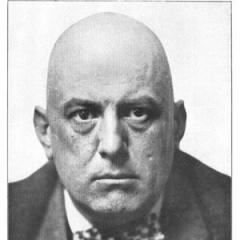
Aleister Crowley
Aleister Crowley

Aleister Crowley, a British poet, mystic, and writer, was born on October 12, 1875, and died on December 1, 1947. He is known for his poetic works and mystical practices, and is considered one of the most controversial figures of the 20th century. more

You May Also Like

“When you say 'I want to fit in,' you are essentially volunteering yourself as a victim, and when the thing you want to fit in with is 'society' - well, as 'society' is just another word for government, you're basically begging the government to control you and use you as it wishes for its nefarious purposes, which can be pretty damn nefarious, if 'nefarious' means what I believe it does.”

“Dear Amnesiac, Yes, your pyramids were raised Roughly up at right angles To exert out loud and bright in the jungle And obscure in darkness the jungle around— And how many years is it you're living In fear of the darkness there created? You’ve your back to the door and the four corners You’re standing in a room with walls and a floor But just the same as any other You’ve stood in in pictures or places before. Alien in your place of birth, you pound An outraged fist into your palm, but are Too over-tired and too much adrift, Not at home, grown absent in an absent world. So— your steam engine roared Across space and the four seasons, And from conductors’ hands unloaded Its surplus even to the farthest hamlet. Yes, your transportations have taken you Beyond the known horizon, but not any Nearer to infinity, nor to eternity. That is the moon double-paned in the window-glass But could just as well be another bulb reflected. Afloat, nowhere, a ghost you have become You having from many hands vanished. Your mind will not stop wandering, and all over These carnival streets is too much noise for hearing. You have withdrawn from this; are living in fear. You fear death and the chances of death So far removed you live from dying... And waking up you find the day is there, Existing, all-ready, you can only enter— And looking to the night you see a frontier that's Cold, empty, like it's a world you've never known. You've become stuck in the middle of it, without any Sense of the horizons, and are all the time crying Too furious for the ruin of your world. But every thing in ruin must first be made: A wildfire only burns, transforms The wood, and passes. It is not a collapse. Too anxious you’re striving to build a new day— Every morning only awaits your being born.”

“চাঁদের গুহার দিকে নির্নিমেষে চেয়ে থাকি, মেঝের উপরে দাঁড়িয়ে রয়েছে চাঁদ, প্রকাশ্য দিনের বেলা, স্পষ্ট দেখা যায় চাঁদের গুহার দিকে নির্নিমেষে চেয়ে থাকি, ঘাসগুলো ছোটো করে ছাঁটা । ঘাসের ভিতর দিয়ে দেখা যায় গুহার উপরকার ভাঁজ । গুহার লুকোনো মুখ থেকে শুরু হয়ে সেই ভাঁজটি এসেছে বাহিরে পেটের দিকে । চাঁদ হেঁটে এসে যেই বিছানার উপরে দাঁড়াল অমনি চাঁদকে বলি, ‘তেল লাগাবে না আজ’, শুনে চাঁদ বলে ‘মাখব নিশ্চয়, তবে একটু অপেক্ষা কর’ বলে সে অয়েলক্লথ নিয়ে পেতে দিল বিছানায়, বালিশের কিছু নিচে, তারপর হেঁটে এসে চলে গেল নিকটে তাকের দিকে, একটি বোতল থেকে বাম হাতে তেল নিয়ে এল এসে তেল মাখা হাতে ভুট্টাটি চেপে ধরে । যখন ধরল তার আগেই ভুট্টাটি খাড়া হয়ে গিয়েছিল । চাঁদ আমি দুজনেই মেঝেতে দাঁড়ানো মুখোমুখি এক হাতে ঘসে ঘসে ভুট্টার উপরে চাঁদ তেল মেখে দিল ।”

“In the value-framework of his age the verbal expression of Hallaj's ecstatic state existed as a totality, and the meaning of the expression rested on the biographical evidence and on the dimensions available within the ecstatic state. It was perhaps for this reason that the phrase ana al-haqq could not derive any other meaning except the one dictated by the academic discipline of the Divine Unity. Consequently, al-Haqq became synonymous with the Divinity, and the phrase ana al-haqq was understood to carry suggestions towards the unification of God and man. Thus, "I am the Truth" became transformed to the startling expression of "I am God". However, in the first two hundred years of the controversy, it was Kashf al-Mahjub which had attempted to strike a balance and had indicated that the expression could be made a subject of literary treatment.”

“Shaikh Ahmad of Sirhind (1563-1624) discussed it within the canon of theological tradition and held that ana al-haqq was a situational statement and that it represented a quality of authentic experience. The Shaikh suggested that ana—the personal "I," and al-haqq, the Truth, had no reference to a unitive condition, in fact; al-haqq completely surrounded the consciousness of the contemplative ego. Placed in this state the ana could only know the surrounding al-haqq—and simultaneously lose its own identity. It was in fact the loss of personal identity which gave significance to Hallaj's statement. The Shaikh held that ana al-haqq did not have any reference to unification either with the Divine Essence or its Attribute. Thus, ana al-haqq, as "I am the Truth," was categorically discarded by the Shaikh who interpretted the phrases as affirmation by negation. According to him, ana al-haqq did not carry the affirmatory meaning of "I am the Truth," but simply made the statement that, "I am not, He only is". Without negation of the self, the affirmation of Divine Truth remains unresolved. Hallaj had in fact affirmed the faith through negation of the contemplative ego.”