Quotessence
Home / Quotes / Quote by Julia Serano

Quote by Julia Serano

“The main reason why trans-woman-exclusion evokes such passion and frustration in me is precisely because it is both anti-trans and antifeminist. And as a feminist, it gravely disturbs me that other self-described feminists are so willing to overlook or purposefully ignore how inherently sexist trans-woman-exclusion policies and politics are: they favor trans men over trans women, they rampantly objectify trans female bodies, and they privilege trans women's appearances, socialization, and the sex others assigned to us at birth over our persons, our minds, and our identities.”

Quote by Julia Serano

Work

Whipping Girl: A Transsexual Woman on Sexism and the Scapegoating of Femininity

In this work, the author, a transsexual woman and biologist, analyzes the intersections of sexism, transphobia, and the cultural devaluation of femininity. Drawing on personal experience and feminist theory, the book critiques how transgender women are often used as scapegoats for broader societal anxieties about gender. It explores topics such as the medicalization of transgender identities, the politics of passing, and the ways in which femininity is policed and denigrated. The text aims to challenge both mainstream and feminist assumptions about gender, offering a perspective rooted in trans feminist thought. more

Author
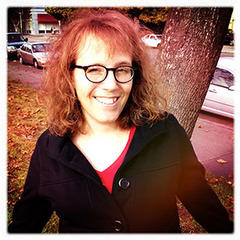
Julia Serano
Julia Serano

Julia Serano is an active writer known for her works on gender and gender identity. Born in 1967, she has been advocating for the LGBTQ+ community since the 1990s. Serano's works aim to challenge traditional gender norms and promote understanding of gender diversity. more

You May Also Like

“Sometimes, sexual violence is a ‘cultural problem’ (but only when this culture is non white). Sometimes, it is a product of male anatomy (but only when this anatomy is assigned to a trans woman or a man of colour). Sexual violence is never the violence of heteropatriarchy or globalising racial capital. Instead, representatives of patriarchy, capitalism and colonialism weaponise the idea of ‘women’s safety’ against marginalised and hyper-exploited groups.”

“This…exemplifies how trans-exclusionary feminism uses the experience of rape. Drawing on the radical feminist idea of the penis as a weapon, it ‘sticks’ this organ to trans women through an obsession with their surgical status. The ‘threat’ posed by the trans woman is then juxtaposed with the threatened (white) femininity of the abuse survivor. Cue outrage.”

“The more she thought about it, imagining those soft lips opening around her tongue, those long lashes fluttering in dreamy anticipation, the more she realized that no specific moment, no single touch, was to blame. What mattered was that she’d broken the silent rule. She’d touched a girl before the girl touched her, had laid her violent hands on tender skin. She should have known better. Self-pity pressed against her mouth and nostrils like a sodden rag. I’m a girl until a real one decides I’m not.”

“At the first trans health conference I ever attended, a parent asked about long-term health risks for people taking hormones. The doctor gave a full assessment of issues that trans men face; many of them mimic the risks that would be inherited from father to son if they'd been born male, now that testosterone is a factor. "What about trans women?" another parent asked. The doctor took a deep breath. "Those outcomes are murkier. Because trans women are so discriminated against, they're at far greater risk for issues like alcoholism, poverty, homelessness, and lack of access to good healthcare. All of these issues impact their overall health so much that it's hard to gather data on what their health outcomes would be if these issues weren't present." This was stunning-a group of people is treated so badly by our culture that we can't clearly study their health. The burden of this abuse is that substantial and pervasive. Your generation will be healthier. The signs are already there.”

“Those who were gay were told they were ‘too close’ to the work, and, according to one former senior clinician, anyone who spoke out was ‘made to feel hysterical’ in some way. ‘The more anxious and worried you became, the more it was framed that you weren’t really someone who could handle it.’ It was ‘a brilliant way to divert it away from what we’re actually doing, which was changing children’s bodies’, they say. It is not credible to explain away the concerns of so many experienced clinicians either by accusations of transphobia or allegations that they are simply not up to the task at hand.”