“Marx was troubled by the question of why ancient Greek art retained an ‘eternal charm’, even though the social conditions which produced it had long passed; but how do we know that it will remain ‘eternally’ charming, since history has not yet ended? Let us imagine that by dint of some deft archaeological research we discovered a great deal more about what ancient Greek tragedy actually meant to its original audiences, recognized that these concerns were utterly remote from our own, and began to read the plays again in the light of this deepened knowledge. One result might be that we stopped enjoying them. We might come to see that we had enjoyed them previously because we were unwittingly reading them in the light of our own preoccupations; once this became less possible, the drama might cease to speak at all significantly to us. The fact that we always interpret literary works to some extent in the light of our own concerns - indeed that in one sense of ‘our own concerns’ we are incapable of doing anything else - might be one reason why certain works of literature seem to retain their value across the centuries. It may be, of course, that we still share many preoccupations with the work itself; but it may also be that people have not actually been valuing the ‘same’ work at all, even though they may think they have. ‘Our’ Homer is not identical with the Homer of the Middle Ages, nor ‘our’ Shakespeare with that of his contemporaries; it is rather that different historical periods have constructed a ‘different’ Homer and Shakespeare for their own purposes, and found in these texts elements to value or devalue, though not necessarily the same ones. All literary works, in other words, are ‘rewritten’, if only unconsciously, by the societies which read them; indeed there is no reading of a work which is not also a ‘re-writing’. No work, and no current evaluation of it, can simply be extended to new groups of people without being changed, perhaps almost unrecognizably, in the process; and this is one reason why what counts as literature is a notably unstable affair.”
Quote by Terry Eagleton
Work
This book serves as an introductory resource for understanding the various theories and methodologies that shape the study of literature. It covers key concepts such as structuralism, postmodernism, and deconstruction, offering insights into the analysis of literary texts and their cultural contexts. more
Author
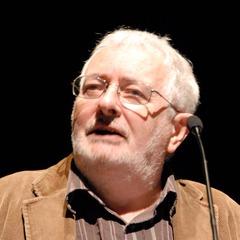
Terry Eagleton is a renowned British literary critic, known for his research on Marxist literary theory. His work spans a wide range of literary and theoretical topics, influencing cultural studies and political commentary as well. more
You May Also Like
“Look at not its value[sic], for its value addition shows its worth.”
“Dreams can be of value even if you don’t have an opportunity to turn them into reality.”
“You don't have to let his definition of success be yours”