Quotessence
Home / Quotes / Quote by John Wyndham

Quote by John Wyndham

Work

Chocky

Browse quotes and source details for this work. more

Author

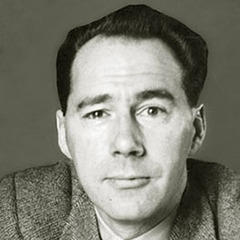
John Wyndham
John Wyndham

John Wyndham was an English science fiction writer known for his novels that often explore social and environmental issues. His works are renowned for their unique imagination and profound insights. more

You May Also Like

“The political version of this was the seemingly clearcut choice before the New Left, to either transform the Establishment from within (the Long March through the institutions envisioned by the Prague Spring reformers and Western social democrats alike), or else to instigate an actual revolution in the streets. History teaches us that both options were illusory; national social democracy could temporarily flourish in the hothouse export-platform economies of Central Europe, but a resurgent neoliberalism was about to strangle the effective global demand this model depended on and thus reactivate the latent class tensions smoothed over by the golden age of state-monopoly Keynesianism; meanwhile the national-democratic and anti-colonial revolutions in the Second and Third Worlds could defeat the US Empire’s rampaging armies with guerilla tactics, but could hardly be expected to counter the far more insidious enemy of falling raw materials prices on world markets. Neither international solidarity actions nor neo-national political disruptions were, by themselves, really capable of challenging the henceforth global habitus of multinational capitalism; only truly transnational labor and political movements would be able to do that.”

“The most striking difference between the ancient and modern sophists is that the ancients were satisfied with a passing victory of the argument at the expense of truth, whereas the moderns want a more lasting victory at the expense of reality. In other words, one destroyed the dignity of human thought whereas the others destroy the dignity of human action. The old manipulators of logic were the concern of the philosopher, whereas the modern manipulators of facts stand in the way of the historian. For history itself is destroyed, and its comprehensibility—based upon the fact that it is enacted by men and therefore can be understood by men—is in danger, whenever facts are no longer held to be part and parcel of the past and present world, and are misused to prove this or that opinion.”

“A fundamental difference between modern dictatorships and all other tyrannies of the past is that terror is no longer used as a means to exterminate and frighten opponents, but as an instrument to rule masses of people who are perfectly obedient. Terror as we know it today strikes without any preliminary provocation, its victims are innocent even from the point of view of the persecutor. This was the case in Nazi Germany when full terror was directed against Jews, i.e., against people with certain common characteristics which were independent of their specific behavior. In Soviet Russia the situation is more confused, but the facts, unfortunately, are only too obvious. On the one hand, the Bolshevik system, unlike the Nazis, never admitted theoretically that it could practice terror against innocent people, and though in view of certain practices this may look like hypocrisy, it makes quite a difference. Russian practice, on the other hand, is even more "advanced" than the German in one respect: arbitrariness of terror is not even limited by racial differentiation, while the old class categories have long since been discarded, so that anybody in Russia may suddenly become a victim of the police terror. We are not concerned here with the ultimate consequence of rule by terror—namely, that nobody, not even the executors, can ever be free of fear; in our context we are dealing merely with the arbitrariness by which victims are chosen, and for this it is decisive that they are objectively innocent, that they are chosen regardless of what they may or may not have done.”