Quotessence
Home / Quotes / Quote by Jacques Barzun

Quote by Jacques Barzun

“We are accustomed to the artist scoundrel or specialist in vice, and unaccustomed to the creator in whom passion and reason and moral integrity hold in balance. But greatness of intellect and feeling, or soul and conduct - magnanimity, in short - does occur; it is not a myth for boy scouts, and its reality is important, if only to give us the true range of the term "human," which we so regularly define by its lower reaches.”

Quote by Jacques Barzun

Author
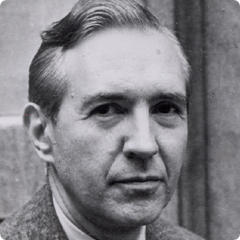
Jacques Barzun
Jacques Barzun

Jacques Barzun was an American historian, born on November 30, 1907, and passed away on October 25, 2012. He was renowned for his profound insights into Western culture, literature, and history, and is considered one of the most important cultural critics of the 20th century. more

You May Also Like

“Shaw does not merely decorate a proposition, but makes his way from point to point through new and difficult territory. This explains why Shaw must either be taken whole or left alone. He must be disassembled and put together again with nothing left out, under pain of incomprehension; for his politics, his art, and his religion - to say nothing of the shape of his sentences - are unique expressions of this enormously enlarged and yet concentrated consciousness.”

“On the one hand, society needs a common faith and vigorous institutions with the power to coerce; and on the other, the individual as a human soul or as the bearer of a new and possibly saving heresy, must be free. It is difficult enough to reconcile these two needs, but the problem holds another hazard: the need of action under the pressure of time.”

“Criticism will need an injection of humility that is, a recognition of its role as ancillary to the arts, needed only occasionally in a temporary capacity. Since the critic exists only for introducing and explaining, he must be readily intelligible; he has no special vocabulary: criticism is in no way a science or a system.”

“On reflection, moral judgment in the arts appears rather as a tribute to their power to influence emotion and possibly conduct. And reflecting further on what some critics do today, one sees that a good many have merely shifted the ground of their moralism, transferring their impulse of righteousness to politics and social issues.”

“Can an idea a notion as abstract as Relativism produce by itself the effects alleged? cause all the harm, destroy all the lives and reputations? I am as far as anyone can be from denying the power of ideas in history, but the suggestion that a philosophy (as Relativism is often called) has perverted millions and debased daily life is on the face of it absurd. No idea working alone has ever demoralized society, and there have been plenty of ideas simpler and more exciting than Relativism.”