Quotessence
Home / Quotes / Quote by Fulton J. Sheen

Quote by Fulton J. Sheen

“Possession properly has two faces, two aspects: we all have a right to private property, but this is accompanied by our responsibility for its righteous use. These two things (which should be inseparable) are frequently divided today. Everyone admits that the farmer who own a horse is obligated to feed and care for it, but in the case of stocks and bonds, we often forget that the same principle should prevail.”

Quote by Fulton J. Sheen

Author
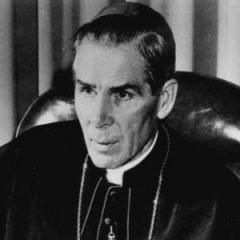
Fulton J. Sheen
Fulton J. Sheen

Fulton J. Sheen, an American television evangelist, was born on May 8, 1895, and passed away on December 9, 1979. Known for his unique charm and wisdom, he spread Christian faith to a global audience through his television programs, becoming one of the most influential religious leaders of the 20th century. more

You May Also Like

“Monopolistic capitalism is to blame for this; it sunders the right to own property from responsibility that owning property involves. Those who own only a few stocks have no practical control of any industry. They vote by postcard proxy, but they have rarely even seen "their" company. The two elements which ought to be inextricably joined in any true conception of private property - ownership and responsibility - are separated. Those who own do not manage; those who manage; those who manage and work do not control or own.”

“The workmen in a factory may have a shadowy, unknown absentee "employer" - the thousands of individual owners of stock - whom "management" represents and tries to please by extra dividends. The workman's livelihood is at the disposition of strangers who make a single demand of their representatives: higher profits.”

“Faced with such insecurity, labor unions seek a solution in demands for higher wages, shorter hours, pensions, and such things. But this approach takes monopolistic capitalism for granted, and accepts the unnatural division between property and responsibility as permanent. A much more radical solution is apt to come, and this may take either of two forms.”

“A democracy flirts with the danger of becoming a slave in direct ratio to the numbers of its citizens who work, but do not own / or who own, but do not work; or who distribute, as politicians do, but do not produce. The danger of the "slave state" disappears in ratio to the numbers of people who own property and admit its attendant responsibilities under God. They can call their souls their own because they own and administer something other than their souls. Thus they are free.”

“To an American, that which deprives him of his freedom he regards as injustice, and that which allows him to enjoy that freedom he regards as justice. The concept of justice is as central to the totality of his being as freedom is, and this is not surprising, since the motivating idea behind the American Declaration of Independence was the fervent desire for justice.”

“In the USA, where so many people compete for one and the same thing, where job opportunities, residential facilities, and food resources have to be spread over so many people, the question of justice becomes more imperative than ever before if communal and individual life is to be made possible and enjoyable.”