Quotessence
Home / Quotes / Quote by Isaac Asimov

Quote by Isaac Asimov

“No puede esperarse que el Universo respete las emociones humanas. Envejecerá y morirá sin consideración alguna para con los lamentos del hombre, y sus componentes seguirán alejándose unos de otros en un proceso de eterna expansión incluso después de que las galaxias se hayan consumido hasta convertirse en cenizas de enanas blancas.”

Quote by Isaac Asimov

Work

The Universe: From Flat Earth to Quasar

Browse quotes and source details for this work. more

Author
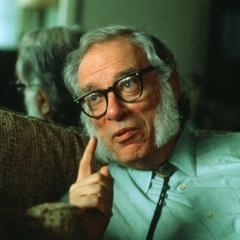
Isaac Asimov
Isaac Asimov

Isaac Asimov, born on January 2, 1920 in Poland and died on April 6, 1992 in the United States, was a renowned American science fiction author, science writer, and literary critic, known as the 'Father of Science Fiction'. His works covered a wide range of science fiction themes, including robots, space exploration, and time travel, and had a profound impact on science fiction literature and the popularization of science. more

You May Also Like

“The Power that knows the way will take care of you. The One who makes the sun shine, the grass grow, the apples grow perfectly on apple trees. The food that sustains us, nourishes us, everything has been lovingly provided for us. Have faith. Trust the Power that knows the way. This is a first step. To have total faith and total trust in the Infinite, the One. You may call this God if you want to. Makes no difference what you call it. It is within you. It is without you. It is everywhere. (p. 195)”

“While they prefer to avoid cracks and flaws, many choose to recalibrate their lives, weigh, and assess what they perceive. Distrusting vague descriptions and suspecting “loose ends,” they seek to measure the world. Precision and transparency are their passion that can help balance their thoughts and still their mind. Measuring is knowing, and the right measurement offers them knowledge and inner peace. (“Measuring space”)”

“Loving, of enemies is another dogma of feigned morality, and has besides no meaning. It is incumbent on man, as a moralist, that he does not revenge an injury; and it is equally as good in a political sense, for there is no end to retaliation; each retaliates on the other, and calls it justice: but to love in proportion to the injury, if it could be done, would be to offer a premium for a crime. Besides, the word enemies is too vague and general to be used in a moral maxim, which ought always to be clear and defined, like a proverb. If a man be the enemy of another from mistake and prejudice, as in the case of religious opinions, and sometimes in politics, that man is different to an enemy at heart with a criminal intention; and it is incumbent upon us, and it contributes also to our own tranquillity, that we put the best construction upon a thing that it will bear. But even this erroneous motive in him makes no motive for love on the other part; and to say that we can love voluntarily, and without a motive, is morally and physically impossible. Morality is injured by prescribing to it duties that, in the first place, are impossible to be performed, and if they could be would be productive of evil; or, as before said, be premiums for crime. The maxim of doing as we would be done unto does not include this strange doctrine of loving enemies; for no man expects to be loved himself for his crime or for his enmity. Those who preach this doctrine of loving their enemies, are in general the greatest persecutors, and they act consistently by so doing; for the doctrine is hypocritical, and it is natural that hypocrisy should act the reverse of what it preaches. For my own part, I disown the doctrine, and consider it as a feigned or fabulous morality; yet the man does not exist that can say I have persecuted him, or any man, or any set of men, either in the American Revolution, or in the French Revolution; or that I have, in any case, returned evil for evil.”