“From the creation learn to admire thy Lord! And if any of the things thou see exceed thy comprehension, and thou are not able to find the reason thereof, yet for this glorify the Creator, that the wisdom of these works surpass thine understanding.”
Quote by Saint John Chrysostom
Work
The Homilies of S. John Chrysostom on the Statues: Or, To the People of Antioch
This book is a compilation of homilies delivered by Saint John Chrysostom, a prominent early Christian bishop and theologian. The sermons are aimed at the congregation of Antioch and delve into the significance and implications of statues within the context of Christian faith and practice. more
Author
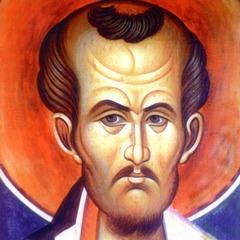
Saint John Chrysostom
Saint John Chrysostom (c. 347 – September 14, 407) was an early Church Father and Archbishop of Constantinople, renowned for his eloquent preaching and oratory, earning the epithet 'Chrysostom' meaning 'golden-mouthed.' Born in Antioch, he received a classical education and later became a hermit. His sermons emphasized moral reform, social justice, and biblical exegesis, often criticizing luxury and corruption. His conflicts with the imperial court and clergy led to multiple exiles, and he died during a forced march. His extensive writings, including homilies, commentaries, and letters, profoundly influenced Eastern Christianity. He is venerated as a saint and Doctor of the Church in Eastern Orthodoxy, Catholicism, and other traditions. more
You May Also Like
Source: The Works of the Right Reverend Father in God, Joseph Hall: Now First Collected. With Some Account of His Life and Sufferings, Written by Himself
Source: The origin of species (low cost). Limited edition
Source: The Complete Novels of George Macdonald (Illustrated): The Princess and the Goblin, The Princess and Curdie, Phantastes, At the Back of the North Wind, Lilith, David Elginbrod, Malcolm, Ranald Bannerman's Boyhood, Wilfrid Cumbermede and many more
Source: Watch Your Walk
Source: Creative Energy: Bearing Witness for the Earth
“Nature is the time-vesture of God that reveals Him to the wise, and hides him from the foolish.”