Quotessence
Home / Quotes / Quote by Joseph Badaracco

Quote by Joseph Badaracco

“Tempered intuition is more than beneficial. It's usually critical to resolving gray area problems. In other words, in the end, these problems are resolved by someone in a position of authority saying this is what I think we should do and will do to address this problem.”

Quote by Joseph Badaracco

Author
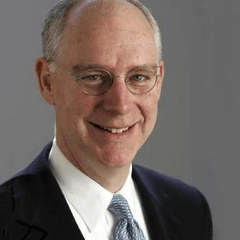
Joseph Badaracco
Joseph Badaracco

Joseph Badaracco is a renowned professor in the field of business ethics and leadership. His specific birth and death dates are unknown. more

You May Also Like

“Toronto won't topple New York or London as a financial center, nor will it dethrone Los Angeles as the international entertainment capital, but with its large and stable banks, numerous knowledge-based industries thriving in the surrounding mega-regions, and an increasingly diverse population, it will gain ground. And with employment opportunities in the largest centers eroding, it can make a big move on top global talent. It stands as a model of an older, once heavily industrial Frostbelt city that has not only turned itself around but continues to grow and thrive.”

“There's no getting around the fact that some cities face long odds, and governments and societies are going to be confronted with some hard decisions. Most importantly, cities have to recognize that in times of crisis they have to help themselves. Governments, no matter how well intentioned, can only do so much, especially when they themselves are so strapped for cash, as the U.S. is now. Government money will probably flow to cities and regions with good prospects for the future, so as not to risk money even further by pouring it into stalled economic models.”

“We have to acknowledge that we can't look to manufacturing or natural resources to drive growth like we have in the past. Human capital, talent, and knowledge are our most important resources now. Every city has hidden seeds of opportunity waiting to be nurtured. Places like Detroit, Cleveland, and Pittsburgh are among my favorite cities. They have great universities, clusters of innovation across a range of industries, and pools of innovative and creative talent to build on.”

“Housing has always been a key to Great Resets. During the Great Depression and New Deal, the federal government created a new system of housing finance to usher in the era of suburbanization. We need an even more radical shift in housing today. Housing has consumed too much of our economic resources and distorted the economy. It has trapped people who are underwater on their mortgages or can't sell their homes. And in doing so has left the labor market unable to flexibly adjust to new economic realities.”

“We need to remake and reinvent our housing system so that it supports the flexibility and mobility of our economic system broadly. Home-ownership is rewarded by the federal tax code, which made great sense when that piece of the American Dream, and all the consumption that came with it, was essential to rebuilding the economy. These days, however, it feels like a huge penalty to people who want to travel light within the new mobile economy without a mortgage to hold them back.”

“Already, new forms of short-term and long-term rental housing are popping up in some metro areas. You can take on a house or apartment for a few months or even a year or two in developments that are striving to provide critical elements of community - schools, healthcare, social and cultural institutions - even for people who are living there only temporarily. People invested in a home, mortgage, or community are less likely to move to more economically vibrant locales. That kind of entrenchment is going to be an impediment to the coming spatial fix.”

“We need to find ways to transform the more than 60 million service jobs, which make up 45 percent of U.S. employment, in the same way - rewarding workers financially, encouraging and empowering creative participation, creating professional communities, and so on. We can look to any number of new companies - from Zappos, to Starbucks, to American Apparel - for examples of how this idea might play itself out. We need to do more to make service jobs into higher-paying family-supporting jobs of the future.”

“I think we'll start defining wealth and success differently and develop new approaches to consumption. Things that have always signified wealth and security - home ownership, new cars, luxury goods - have become a burden for many people and will be replaced by more experiential consumption like travel and recreation, self-improvement, and so on. By divesting themselves of certain big-ticket possessions that have been keeping them tied down, people will gain a new freedom to live more meaningful lives. Changes in consumption and lifestyle are key to Great Resets.”