“Some people have read a few Marxist books and think themselves quite learned but what they have read has not penetrated, has not struck root in their minds, so that they do not know how to use it and their class feelings remain as of old. Others are very conceited and having learned some book-phrases, think them terrific and are very cocky; but whenever a storm blows up, they take a stand very different from that of the workers and the majority of the peasants. They waver while the latter stand firm, they equivocate while the latter are forthright.”
Quote by Mao Zedong
Work
Speech at the Chinese Communist Party's National Conference on Propaganda Work: March 12, 1957
The speech is a historical document that reflects the political and ideological stance of the Chinese Communist Party during the early 1950s. It discusses the importance of propaganda in shaping public opinion and maintaining party unity. The speech also outlines specific strategies and goals for propaganda work within the party and the broader society. more
Author
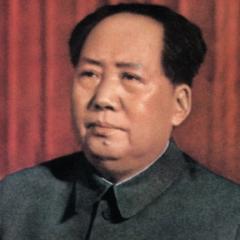
Mao Zedong
Mao Zedong, born on December 26, 1893, in Xiangtan County, Hunan Province, and died on September 9, 1976. He was one of the founders of the Communist Party of China and served as the Chairman of the People's Republic of China. Mao played a significant role in the history of China's revolution and construction, proposing many theories and practices with profound influence. more
You May Also Like
“I've got to play in front of people. If I'm not moved, how can they be moved.”
“Abel has left mathematicians something to keep them busy for five hundred years.”
“An accomplished mathematician, i.e. a most wretched orator.”
Source: The Usefulness of Mathematical Learning Explained and Demonstrated: Being Mathematical Lectures Read in the Publick Schools at the University of Cambridge
Source: A Mathematician's Apology
“Not to like ice cream is to show oneself uninterested in food.”