Quotessence
Home / Quotes / Quote by David Abram

Quote by David Abram

“The animate earth - this moody terrain that we experience differently in anger and in joy, in grief and in love - is both the soil in which all our sciences are rooted and the rich humus into which their results ultimately return, whether as nutrients or as poisons. Our spontaneous experience of the world, charged with subjective, emotional, and intuitive content, remains the vital and dark ground of all our objectivity”

Quote by David Abram

Author
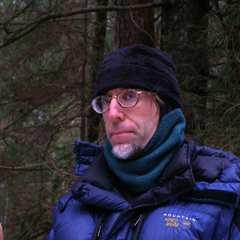
David Abram
David Abram

David Abram is an American philosopher known for his research in environmental philosophy and philosophy of perception. His works explore the relationship between humans and the natural world, as well as how language, culture, and perception shape our perception of reality. more

You May Also Like

“The belief in an external world independent of the perceiving subject is the basis of all natural science. Since, however, sense perception only gives information of this external world or of "physical reality" indirectly, we can only grasp the latter by speculative means. It follows from this that our notions of physical reality can never be final. We must always be ready to change these notions - that is to say, the axiomatic basis of physics - in order to do justice to perceived facts in the most perfect way.”

“At the beginning of the new millennium, we still do not know why mathematics is true and whether it is certain. But we know what we do not know in an immeasurably richer way than we did. And learning this has been a remarkable achievement-among the greatest and least-known of the modern era.”

“The past history of human belief is a cautionary tale. We have killed thousands of our fellow human beings because we believed they had signed a contract with the devil, and had become witches. We still kill more than a thousand people each year for witchcraft. In my view, there is only one hope for humankind to emerge from what Carl Sagan called "the demon-haunted world" of our past. That hope is science.”