Quotessence
Home / Quotes / Quote by Plutarch

Quote by Plutarch

“Epaminondas is reported wittily to have said of a good man that died about the time of the battle of Leuctra, "How came he to have so much leisure as to die, when there was so much stirring?”

Quote by Plutarch

Work

Plutarch's Lives and Writings

Comprising a series of parallel lives, Plutarch compares the virtues and vices of famous individuals from the past, offering insights into human nature and moral philosophy. The work is a cornerstone of classical literature and has influenced countless scholars and readers throughout history. more

Author
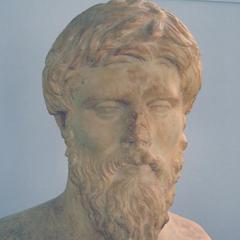
Plutarch
Plutarch

Plutarch, a renowned Greek historian and biographer, was born in 45 AD and died in 120 AD. His works are characterized by rigorous historical research and profound moral contemplation, having a profound impact on later generations. more

You May Also Like

“So far as discipline is concerned, freedom means not its absence but the use of higher and more rational forms as contrasted with those that are lower or less rational. A free discipline controls the individual by appealing to his reason and conscience, and therefore to his self-respect; while an unfree control works upon some lower phase of the mind, and so tends to degrade him. It is freedom to be disciplined in as rational a manner as you are fit for.”

“Since freedom is not a fixed thing that can be grasped and held once for all, but a growth, any particular society, such as our own, always appears partly free and partly unfree. In so far as it favors, in every child, the development of his highest possibilities, it is free, but where it falls short of this it is not.”

“If the man succeeds in becoming indifferent to the opinions of his neighbors he runs into another danger, that of a distorted and extravagant self of the pride sort, since by the very process of gaining independence and immunity from the stings of depreciation and misunderstanding, he has perhaps lost that wholesome deference to some social tribunal that a man cannot dispense with and remain quite sane.”

“There is perhaps no sort of self more subject to dangerous egotism than that which deludes itself with the notion that it is not a self at all, but something else. It is well to beware of persons who believe that the cause, the mission, the philanthropy, the hero, or whatever it may be that they strive for, is outside of themselves, so that they feel a certain irresponsibility, and are likely to do things which they would recognize as wrong if done in behalf of an acknowledged self.”