“[Man] ... his origin, his growth, his hopes and fears, his loves and his beliefs are but the outcome of accidental collocations of atoms; that no fire, no heroism, no intensity of thought and feeling can preserve an individual life beyond the grave; that all the labour of the ages, all the devotion, all the inspiration, all the noonday brightness of human genius are destined to extinction in the vast death of the solar system, and that the whole temple of Man's achievement must inevitably be buried beneath the debris of a universe in ruins.”
Quote by Bertrand Russell
Work
Mysticism and Logic and Other Essays
This book is a compilation of essays that delve into the philosophical concepts of mysticism and logic, offering insights into the nature of reality and the human experience. more
Author
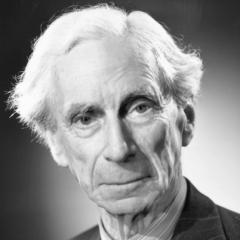
Bertrand Russell
Bertrand Russell was a British philosopher, mathematician, and logician born on May 18, 1872, and died on February 2, 1970. He is known for his contributions to logic and mathematics, particularly in the fields of mathematical logic and philosophical analysis. His works spanned a wide range of subjects, including ethics, political philosophy, history, and literary criticism. more
You May Also Like
“We must never make experiments to confirm our ideas, but simply to control them.”
Source: Experimental Medicine
Source: The Orations of Marcus Tullius Cicero
“A single idea, if it is right, saves us the labor of an infinity of experiences.”