Quotessence
Home / Quotes / Quote by Bret Easton Ellis

Quote by Bret Easton Ellis

Author

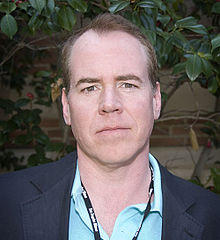
Bret Easton Ellis
Bret Easton Ellis

American novelist known for his profound insights into modern urban life and sharp criticism. His works, including 'Less Than Zero' and 'The Rules of Attraction', are renowned for their unique narrative style and sharp social observations. more

You May Also Like

“I started inventing things, and then I couldn't stop, like beavers, which I know about. People think they cut down trees so they can build dams, but in reality it's because their teeth never stop growing, and if they didn't constantly file them down by cutting through all of those trees, their teeth would start to grow into their own faces, which would kill them. That's how my brain was.”

“That's the point. Every kind of animal thinks its own kind of animal is wonderful. So people getting married think they're wonderful, and that they're going to have a baby-- that's wonderful, when actually they're as ugly as rhinoceroses. Just because we think we're so wonderful doesn't mean we really are. We could be really terrible animals and just never admit it because it would hurt so much.”

“For as long as I can remember, my father saved. He saves money, he saves disfigured sticks that resemble disfigured celebrities, and most of all, he saves food. Cherry tomatoes, sausage biscuits, the olives plucked from other people's martinis --he hides these things in strange places until they are rotten. And then he eats them.”

“There is nothing enlightened about shrinking so that other people will not feel insecure around you. We are all meant to shine, as children do. We were born to make manifest the glory of God that is within us. It is not just in some of us; it is in everyone and as we let our own light shine, we unconsciously give others permission to do the same. As we are liberated from our own fear, our presence automatically liberates others.”

“It is related that Sakyamuni [the historical Buddha] once dismissed as of small consequence a feat of levitation on the part of a disciple, and cried out in pity for a yogin by the river who had spent twenty years of his human existence learning to walk on water, when the ferryman might have taken him across for a small coin.”

“I always thought old age would be a writer’s best chance. Whenever I read the late work of Goethe or W. B. Yeats I had the impertinence to identify with it. Now, my memory’s gone, all the old fluency’s disappeared. I don’t write a single sentence without saying to myself, ‘It’s a lie!’ So I know I was right. It’s the best chance I’ve ever had.”