Quotessence
Home / Quotes / Quote by Socrates

Quote by Socrates

Author

Socrates
Socrates

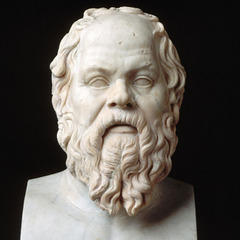
Socrates, a renowned Greek philosopher, lived from 471 BC to 399 BC. He is known for his unique teaching method, the Socratic method, which emphasizes self-discovery through questioning. Socrates' philosophical ideas have had a profound impact on subsequent philosophy, and he is considered one of the founders of Western philosophy. more

You May Also Like

“When the number of factors coming into play in a phenomenological complex is too large scientific method in most cases fails. One need only think of the weather, in which case the prediction even for a few days ahead is impossible. Nevertheless, no one doubts that we are confronted with a causal connection whose causal components are in the main known to us. Occurrences in this domain are beyond the reach of exact prediction because of the variety of factors in operation, not because of any lack of order in nature.”

“In reviewing the most mysterious doctrines of revelation, the ultimate appeal is to reason, not to determine whether she could have discovered these truths; not to declare whether, considered in themselves, they appear probable; but to decide whether it is not more reasonable to believe what God speaks than to confide in our own crude and feeble conceptions. No doctrine can be a proper object of our faith, which is not more reasonable to believe than to reject.”

“The last decisive energy of a rational courage which confides in the Supreme Power is very sublime. It makes a man who intrepidly dares every thing that can oppose or attack him within the sphere of mortality-who will press toward his object while death is impending over him-who would retain his purpose unshaken amidst the ruins of the world.”

“The soul seeks God by faith, not by the reasonings of the mind and labored efforts, but by the drawings of love; to which inclinations God responds, and instructs the soul, which co-operates actively. God then puts the soul in a passive state where He accomplishes all, causing great progress, first by way of enjoyment, then by privation, and finally by pure love.”