Quotessence
Home / Quotes / Quote by Marcel Proust

Quote by Marcel Proust

Author

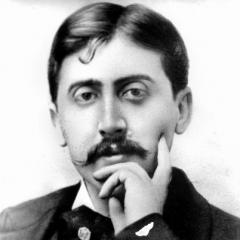
Marcel Proust
Marcel Proust

Marcel Proust was a French novelist renowned for his magnum opus, 'In Search of Lost Time'. This novel is considered a classic of 20th-century literature, known for its intricate psychological portrayals and profound exploration of memory. more

You May Also Like

“The truth has no need to be uttered to be made apparent, and ... one may perhaps gather it with more certainty, without waiting for words and without even taking any account of them, from countless outward signs, even from certain invisible phenomena, analogous in the sphere of human character to what atmospheric changes are in the physical world.”

“There is probably no one, however rigid his virtue, who is not liable to find himself, by the complexity of circumstances, living at close quarters with the very vice which he himself has been most outspoken in condemning -- without altogether recognizing it beneath the disguise of ambiguous behavior which it assumes in his presence.”

“Our virtues themselves are not free and floating qualities over which we retain a permanent control and power of disposal; they come to be so closely linked in our minds with the actions in conjunction with which we have made it our duty to exercise them that if we come to engage in an activity of a different kind, it catches us off guard and without the slightest awareness that it might involve the application of those same virtues.”

“There is no man ... however wise, who has not at some period of his youth said things, or lived a life, the memory of which is so unpleasant to him that he would gladly expunge it. And yet he ought not entirely to regret it, because he cannot be certain that he has indeed become a wise man -- so far as it is possible for any of us to be wise -- unless he has passed through all the fatuous or unwholesome incarnations by which that ultimate stage must be preceded.”

“Daughters of the attitude that produced them, certain women will not appeal to us without the double bed in which we find peace by their side, while others, to be caressed with a more secret intention, require leaves blown by the wind, water rippling in the dark, things as light and fleeting as they are.”

“Certainly, it is more reasonable to devote one's life to women than to postage stamps or old snuff-boxes, even to pictures or statues. But the example of other collections should be a warning to us to diversify, to have not one woman only but several.”