“How else could it have occurred to man to divide the cosmos, on the analogy of day and night, summer and winter, into a bright day-world and a dark night-world peopled with fabulous monsters, unless he had the prototype of such a division in himself, in the polarity between the conscious and the invisible and unknowable unconscious?”
Quote by Carl Jung
Work
The Archetypes and the Collective Unconscious
This book delves into the theories of Carl Jung, focusing on the idea that archetypes are universal patterns of thought and imagery that influence human behavior and creativity. It examines the various archetypes, such as the hero, the mother, and the trickster, and their manifestation in dreams, myths, and literature. more
Author
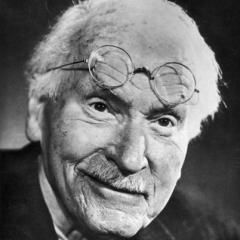
Carl Jung
Carl Jung, born on July 26, 1875, and died on June 6, 1961, was a renowned Swiss psychiatrist and psychologist. His theories have had a profound impact on fields such as psychology, psychiatry, and religious studies. Jung proposed the theory of personality types, the concept of the collective unconscious, and founded analytical psychology. more
You May Also Like
“A great man is different from an eminent one in that he is ready to be the servant of the society.”
“What's right isn't always popular. What's popular isn't always right.”
“In some way or other we are part of a single, all-embracing psyche, a single 'greatest man. . . .'”
Source: Civilization in transition
Source: The Archetypes and the Collective Unconscious
“You can take away a man's gods, but only to give him others in return.”
Source: The Undiscovered Self
“Wherever an inferiority complex exists, there is a good reason for it.”
Source: The Collected Works: The symbolic life. Miscellaneous writings
Source: The Collected Works of C. G. Jung: The spirit in man, art, and literature