Quotessence
Home / Quotes / Quote by Janine Benyus

Quote by Janine Benyus

“The more our world functions like the natural world, the more likely we are to endure on this home that is ours, but not ours alone.”

Quote by Janine Benyus

Author
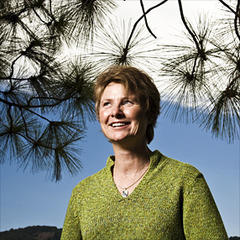
Janine Benyus
Janine Benyus

Janine Benyus is a renowned science writer, born in 1958. She is known for her in-depth research on biomimicry, particularly for her contributions to the field of biomimetic design. Benyus' work emphasizes the principles of sustainability and efficiency found in nature, which can be applied to human technology and design. more

You May Also Like

“Sir, sorrow is inherent in humanity. As you cannot judge two and two to be either five, or three, but certainly four, so, when comparing a worse present state with a better which is past, you cannot but feel sorrow. It is not cured by reason, but by the incursion of present objects, which bear out the past.”

“For sorrow there is no remedy provided by nature; it is often occasioned by accidents irreparable, and dwells upon objects that have lost or changed their existence; it requires what it cannot hope, that the laws of the universe should be repealed; that the dead should return, or the past should be recalled.”

“The safe and general antidote against sorrow is employment. It is commonly observed, that among soldiers and seamen, though there is much kindness, there is little grief; they see their friend fall without any of that lamentation which is indulged in security and idleness, because they have no leisure to spare from the care of themselves; and whoever shall keep his thoughts equally busy will find himself equally unaffected with irretrievable losses.”

“Unless our fundamental sacred connectedness with every being and thing is experienced deeply and enacted everywhere, religious, political, and other differences will go on creating intolerable conflict that can only increase the already dangerously high chances of our self-annihilation.”

“The Mother's knowledge of unity, her powers of sensitivity, humility, and balance, and her infinite respect for the miracle of all life have now to be invoked by each of us and practiced if the 'masculine' rational imbalance of our civilization is to be righted before its too late.”

“Coming to know the hidden and forgotten Mother and the marvelous wisdom of the sacred feminine as revealed from every side and angle by the different mystical traditions is not luxury; it is, I believe, a necessity for our survival as a species.”

“Knowing her we will know that we are her divine children in a relationship of complete, unconditionally loving intimacy; we will know that nature is holy in all its sacred particulars because it is everywhere vibrant with her light and her love; we will know that we have come to this earth not, as some patriarchal mystical traditions have implied, to escape it but to embrace it fully, not to 'transcend' it but to arrive here in full presence, gratitude and love.”