“The time has already come when each country needs a considered national policy about what size of population, whether larger or smaller than at present or the same, is most expedient. And having settled this policy, we must take steps to carry it into operation. The time may arrive a little later when the community as a whole must pay attention to the innate quality as well as to the mere numbers of its future members.”
Quote by John Maynard Keynes
Work
The collected writings of John Maynard Keynes
The collected writings of John Maynard Keynes is a seminal work that brings together a vast array of Keynes' intellectual contributions. It encompasses his seminal work on economic theory, including the General Theory of Employment, Interest, and Money, as well as his insights on monetary policy, fiscal policy, and international trade. This collection is essential for understanding the development of modern economic thought and the impact of Keynesian economics on global economic policy. more
Author
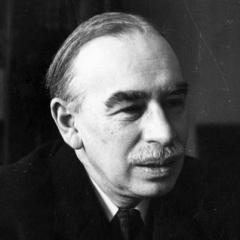
John Maynard Keynes
John Maynard Keynes, born on June 5, 1883, was a prominent British economist whose work had a profound impact on the field of economics, particularly in the area of macroeconomics. His theories advocating for government intervention to stabilize the economy gained widespread application during the Great Depression of the 1930s. more
You May Also Like
Source: The Scientific Outlook
Source: The Quaker, Being a Series of Sermons by Members of the Society of Friends ...
“I hope I'll consider my next part, having learnt from this one.”