Quotessence
Home / Quotes / Quote by Susan Blackmore

Quote by Susan Blackmore

“All things considered, I can see no reason to adopt the afterlife hypothesis. I am sure I shall remain in a minority for a long time to come, especially among experiencers, but for me the evidence and the arguments are overwhelming ... We are biological organisms, evolved in fascinating ways for no purpose at all and with no end in mind. We are simply here and this is how it is. I have no self and "I" own nothing. There is no one to die. There is just this moment, and now this, and now this.”

Quote by Susan Blackmore

Author
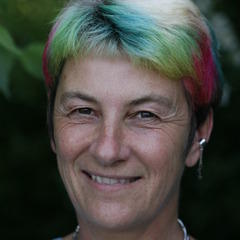
Susan Blackmore
Susan Blackmore

Susan Blackmore is a British writer and cognitive scientist known for her in-depth research into consciousness, death, and parapsychology. Her work explores the nature of human consciousness and how we understand death and life. more

You May Also Like

“Until the content of a belief is made clear, the appeal to accept the belief on faith is beside the point, for one would not know what one has accepted. The request for the meaning of a religious belief is logically prior to the question of accepting that belief on faith or to the question of whether that belief constitutes knowledge.”

“Religious liberty in a nation is as real as the liberty of its least popular religious minority. Look not to the size of cathedrals or even to the words on the statute books for proof of the reality of religious freedom. Ask what is the fate of the Protestant in Spain, the Jew in Saudi Arabia, the Arab in Israel, the Catholic in Poland or the atheist in the United States.”

“One of the most constant characteristics of beliefs is their intolerance. The stronger the belief, the greater its intolerance. Men dominated by a certitude cannot tolerate those who do not accept it.”

“We see, then, that the disappearance of the conscious personality, the predominance of the unconscious personality, the turning by means of suggestion and contagion of feelings and ideas in an identical direction, the tendency to immediately transform the suggested ideas into acts; these, we see, are the principal characteristics of the individual forming part of a crowd. He is no longer himself, but has become an automaton who has ceased to be guided by his will.”