Quotessence
Home / Quotes / Quote by Barbara Brown Taylor

Quote by Barbara Brown Taylor

“You can get lost on your way home. You can get lost looking for love. You can get lost between jobs. You can get lost looking for God. However it happens, take heart. Others before you have found a way in the wilderness, where there are as many angels as there are wild beasts, and plenty of other lost people too. All it takes is one of them to find you. All it takes is you to find one of them. However it happens, you could do worse than to kneel down and ask a blessing, remembering how many knees have kissed this altar before you.”

Quote by Barbara Brown Taylor

Author
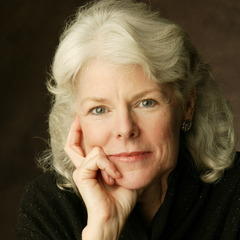
Barbara Brown Taylor

Barbara Brown Taylor, born on September 21, 1951, is an American priest with a profound understanding of theology. She has served as a pastor in several churches and is known for her unique preaching style and insightful views on religious life. more

You May Also Like

“There exists a direct link, or harmony, between the past, the present and the future. This has been misinterpreted, or exaggerated in both directions, either by the assumption that everything is random, or that there is already a predetermined destiny. There is an actual link, and there is a lot of mystery or room to play and invent.”

“The essential war within, and the cause of suffering, begins with the presumption that yearning, impulse and curiosity, desire and question, exist so as to end them. To attain, to acquire, to answer.”

“Transcendence is more about the personal act of not engaging the enemy, finding a way out of the cage that is being designed for you at a particular moment by others, circumstance, or your own bad habits and ignorance.”

“What is at the base of shame or guilt? It is the consciousness of an imbalance, or of an action in the past that has caused, and probably continues to cause, suffering.”

“Transcendence is a word I don’t use often; I prefer transformation. Why? Because the essential game is about using what is in front of you and in you exactly as it is, but finding a way to do something with that that is surprising and an expression of inspiration and intuition. You engage reality and make something out of it that only you can, alchemizing limitation, conflict or what appears to be bad into something else.”

“Transformation, on the other hand, is creating beauty from horror or destruction (or, for beginners, an actually pleasant evening with the usual family problems).”

“Historically, techniques to attain altered states of consciousness, usually called meditation, or sometimes prayer, actually involve various forms of concentration, the first level of this kind of internal work. The linear scale of progression is Concentration, then Meditation, and finally Contemplation. Virtually all categories of meditation are, in actuality, forms of concentration. What makes them so are the innate “goals” or ambitions attached to them: to achieve a state or to acquire something, like relaxation, insight or “advancement.” This then constructs a dichotomy, or dualism, between the pursuer and the thing pursued. That is, you are conscious of or believe in something “better,” you are separate from it, and there is effort to attain it.”

“Meditation, in contrast, is the accidental moments of actual harmony that arrive anyway when you are trying to get something, even in trying to get harmony or calm. This often happens outside of the intention to meditate, and most people access the beginnings of this through other events, such as walking, working, athletic activities, or transitional moments, such as between waking and sleeping. The effect, in brief, is one of harmony and well-being, from which other insights or intuitive glimpses can naturally emerge. The moment you notice this, the meditation is over.”

“Contemplation is purer still, yet more sophisticated. This comes from a strongly developed base of concentration—basically, constancy—through any temptation, including altered states of consciousness, that leads one to meditation (effortless engagement), from which is born an intuitive connection to that which is being focused upon (often, the nature of being in the moment, which is the default “focus”). Some people can attain this state accidentally through some combination of surprising events, which is sometimes called revelation. Fewer still can cause this to happen intentionally, mainly because you have to surprise yourself to have it occur. In any case, it requires a real sense of the value of paradox. One leaves a single position behind (such as “I like this” or “I don’t like this”) and expands in comprehension to simultaneously experience its opposite as well. From there, one rises above the two through a creative burst of intuition, and looks down on them both. What you might call transcendence, although I prefer mildly amused.”