Quotessence
Home / Quotes / Quote by Joyce Kilmer

Quote by Joyce Kilmer

Work

Joyce Kilmer: Memoir and poems

Joyce Kilmer: Memoir and Poems is a compilation of the personal writings of the American poet and soldier. The memoirs provide a glimpse into his life experiences, while the poems showcase his literary contributions, reflecting his thoughts and emotions on various themes. more

Author
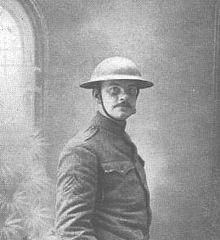
Joyce Kilmer
Joyce Kilmer

Joyce Kilmer was an American writer known for his poetry and prose, characterized by themes of nature and religious faith. His most famous work is 'Tree,' a poem celebrated for its simple yet profound imagery. Born on December 6, 1886, Kilmer was killed in action in France during World War I at the age of 31. more

You May Also Like

“Even here in America, we felt the cool, refreshing breeze of freedom when Nelson Mandela took the seat of Presidency in his country where formerly he was not even allowed to vote. We were enlarged by tears of pride as we saw Nelson Mandela's former prison guards invited, courteously, by him to watch from the front rows his inauguration.”

“Strictly speaking, one cannot legislate love, but what one can do is legislate fairness and justice. If legislation does not prohibit our living side by side, sooner or later your child will fall on the pavement and I'll be the one to pick her up. Or one of my children will not be able to get into the house and you'll have to say, "Stop here until your mom comes here." Legislation affords us the chance to see if we might love each other.”

“Then the question began to live under my blankets: How did lesbianism begin? What were the symptoms? The public library gave information on the finished lesbian--and that woefully sketchy--but on the growth of a lesbian, there was nothing. I did discover that the difference between hermaphrodites and lesbians was that hermaphrodites were "born that way." It was impossible to determine whether lesbians budded gradually, or burst into being with a suddenness that dismayed them as much as it repelled society.”

“Oh, the holiness of always being the injured party. The historically oppressed can find not only sanctity but safety in the stateof victimization. When access to a better life has been denied often enough, and successfully enough, one can use the rejection as an excuse to cease all efforts. After all, one reckons, "they" don't want me, "they" accept their own mediocrity and refuse my best, "they" don't deserve me.”