Quotessence
Home / Quotes / Quote by Charles Nicolle

Quote by Charles Nicolle

“And this is the ultimate lesson that our knowledge of the mode of transmission of typhus has taught us: Man carries on his skin a parasite, the louse. Civilization rids him of it. Should man regress, should he allow himself to resemble a primitive beast, the louse begins to multiply again and treats man as he deserves, as a brute beast. This conclusion would have endeared itself to the warm heart of Alfred Nobel. My contribution to it makes me feel less unworthy of the honour which you have conferred upon me in his name.”

Quote by Charles Nicolle

Author
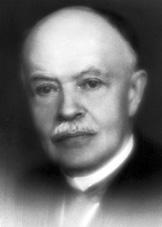
Charles Nicolle
Charles Nicolle

Charles Nicolle was a French physician and public health scientist known for his contributions to bacteriology and the study of infectious diseases. In 1898, he discovered the Vibrio cholerae and proposed the famous Nicolle-Grenniest disinfection method. more

You May Also Like

“As was the case for Nobel's own invention of dynamite, the uses that are made of increased knowledge can serve both beneficial and potentially harmful ends. Increased knowledge clearly implies increased responsibility. We reject the notion advocated in some quarters that man should stop eating from the tree of knowledge, as if that were humanly possible.”

“Either one or the other [analysis or synthesis] may be direct or indirect. The direct procedure is when the point of departure is known-direct synthesis in the elements of geometry. By combining at random simple truths with each other, more complicated ones are deduced from them. This is the method of discovery, the special method of inventions, contrary to popular opinion.”

“Equations seem like treasures, spotted in the rough by some discerning individual, plucked and examined, placed in the grand storehouse of knowledge, passed on from generation to generation. This is so convenient a way to present scientific discovery, and so useful for textbooks, that it can be called the treasure-hunt picture of knowledge.”

“Frequently, I have been asked if an experiment I have planned is pure or applied science; to me it is more important to know if the experiment will yield new and probably enduring knowledge about nature. If it is likely to yield such knowledge, it is, in my opinion, good fundamental research; and this is more important than whether the motivation is purely aesthetic satisfaction on the part of the experimenter on the one hand or the improvement of the stability of a high-power transistor on the other.”