Quotessence
Home / Quotes / Quote by Jonathon Keats

Quote by Jonathon Keats

“I'm not especially interested in the job of the historian or journalist of trying to figure out what was true and what was not.”

Quote by Jonathon Keats

Author
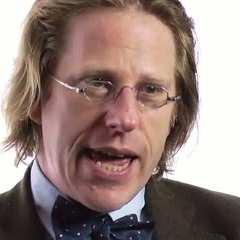
Jonathon Keats
Jonathon Keats

Jonathon Keats is an active artist and writer in the contemporary art and science fields. Known for his interdisciplinary works, he combines scientific concepts with artistic practices to explore the relationship between humans, nature, technology, and the universe. more

You May Also Like

“I was interested first of all in trying to capture this myth that was always changing and to create some sort of a master story, some version of the myth that resonated with me, since I could have taken more or less any detail that I wanted or the opposite and try to put that down on the page in a way that I could express from that outset for myself and for our readers what it was that was so magical about [Buckminster] Fuller's way of putting together the world.”

“[Buckminster Fuller] started talking about it far enough afterwards, an audience that was far enough from when they - when the air flow and the Zephyr and these cars in the time period that were made by mainstream automakers. It was far enough in the future, far enough after that point that nobody really bothered to fact-check.”

“On the other hand, the way in which that car fit into this whole very roundabout way of attempting to solve the problem of what - the problem that [Buckminster Fuller] perceived as being the cause of his daughter's death and meningitis. I mean how you get from your daughter dying from meningitis to making a car with three wheels and saying that it's like a bird and a fish. That really is amazing.”

“Once you start backing into all of that, then you see this incredibly intricate, totally wrong-headed way to do things, but nevertheless has a lot of merit to it for the fact that [Buckminster Fuller] is recognizing much larger patterns, seeking much larger patterns and seeking much larger ways of trying to solve for the problem of unhygienic conditions in slums. They really were unhygienic. Whether his family was living in the slum is debatable but they were unhygienic. That needed to be addressed. He was attempting to address it.”