Quotessence
Home / Quotes / Quote by Paul Merton

Quote by Paul Merton

Author

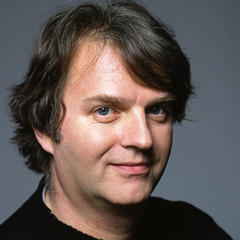
Paul Merton
Paul Merton

Paul Merton is a British writer known for his humor and satire. Born on July 9, 1957, he has made a name for himself in the literary world with his unique writing style and sense of humor. more

You May Also Like

“The most powerful influence exercised by the Arabs on general natural physics was that directed to the advances of chemistry ; a science for which this race created a new era.(...) Besides making laudatory mention of that which we owe to the natural science of the Arabs in both the terrestrial and celestial spheres, we must likewise allude to their contributions in separate paths of intellectual development to the general mass of mathematical science.”

“People only speak to get something. If I say, Let me tell you a few things about myself, already your defenses go up; you go, Look, I wonder what he wants from me, because no one ever speaks except to obtain an objective. That's the only reason anyone ever opens their mouth, onstage or offstage. They may use a language that seems revealing, but if so, it's just coincidence, because what they're trying to do is accomplish an objective.”

“We cannot live in peace without Law. And though law cannot be perfect, it may be just if it is written in ignorance of the identity of the claimants and applied equally to all. Then it is a possession not only of the claimants but of the society, which may now base its actions upon a reasonable assumption of the law?s treatment.”

“I examined my Liberalism and found it like an addiction to roulette. Here, though the odds are plain, and the certainty of loss apparent to anyone with a knowledge of arithmetic, the addict, failing time and again, is convinced he yet is graced with the power to contravene natural laws. The roulette addict, when he invariably comes to grief, does not examine either the nature of roulette, or of his delusion, but retires to develop a new system, and to scheme for more funds.”

“In playwriting, you've got to be able to write dialogue. And if you write enough of it and let it flow enough, you'll probably come across something that will give you a key as to structure. I think the process of writing a play is working back and forth between the moment and the whole. The moment and the whole, the fluidity of the dialogue and the necessity of a strict construction. Letting one predominate for a while and coming back and fixing it so that eventually what you do, like a pastry chef, is frost your mistakes, if you can.”