Quotessence
Home / Quotes / Quote by Bernardo Bertolucci

Quote by Bernardo Bertolucci

Author

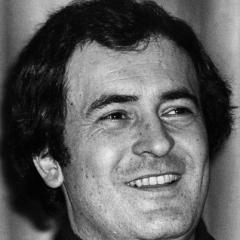
Bernardo Bertolucci
Bernardo Bertolucci

Bernardo Bertolucci is an Italian film director known for his profound artistic style and insightful exploration of themes such as history, politics, and human nature. His works often delve into the complexities of power, love, and identity, with films like 'The Last Emperor' and '1900' gaining international acclaim. more

You May Also Like

“I think that what I learned then, I didn't know I was learning. I just knew that I was very privileged to see somebody who was a writer, a great poet, and very smart-faced. Suddenly Pasolini becomes a director, so he has to invent cinema. It was like watching the invention of cinema. But I found out that Pasolini taught me a lot. It was, especially, the kind of respect that he had for reality. He had kind of epiphanies in his movies, like when a moment becomes full of grace, and it is like as if it was the most important moment in the life of a character.”

“I was seduced by the nouvelle vague, because it was really reinventing everything. And the Italian cinema that one would see in the theaters in the late '50s, early '60s was Italian comedy, Italian style, which, to me, was like the end of neo-realism. I think cinema all over the world was influenced by it, which was Italy finding its freedom at the end of fascism, the end of the Nazi invasion. It was a kind of incredible energy. Then, late '50s, early '60s, the neo-realism lost its great energy and became comedy.”

“The problem in Hollywood is that they try to become the only kind of cinema in the world, okay? The imposition everywhere of a unique culture, which is Hollywood culture, and a unique way of life, which is the American way of life. But Hollywood has forgotten that, in the past, what made Hollywood great and what made it go ahead was the fact that Hollywood was fed with, for example, Jewish directors coming from Germany or Austria and enriching Hollywood. In 15, 20 years, Hollywood became imperialistic. Cinema goes ahead when it is marriaged by other culture. Otherwise, it turns on itself.”

“What I was talking about was, of course, very autobiographical - '68 was the moment when all the young people were incredibly excited, because when we were going to sleep, we knew we would wake up not tomorrow, but in the future. There was a sense of future that was the result of the mixture of politics, cinema, music, the first joints. And the movies were a very important part of that cocktail.”

“The life before '68 was very different from the life after '68. Before '68, our days were full of authoritarian moments. There were authorities everywhere. In fact, the movement of '68 was young people against their authorities, children against their parents. And that remained. The most important thing of all, the thing that lasted, was the first feminist movement and the position of women in society. That completely changed and that was very, very important.”

“They don't mind getting punched in the face and, more importantly, they don't mind punching other people in the face. I'm just about the movies; I enjoy the dexterity of actors in action movies and the choreography side of things. You've just got to be a different person to be a professional fighter. I train with professional fighters so I know what it takes. It's a very difficult profession, probably harder then the acting profession.”

“It was weird working with all of them - Stallone, Schwarzenegger, Bruce Willis, Chuck Norris. There's a sequence in the movie where myself and Jean-Claude Van Damme are running through this airport and there's this silhouette behind this big screen - it smashes, and there you see Schwarzenegger, Stallone, and Bruce Willis all firing their weapons at me and Jean-Claude. It's kind of surreal when you think about it, the three '80s icons of action movies, unloading as many bullets as they could at us. It's pretty crazy.”