Quotessence
Home / Quotes / Quote by Franz Kafka

Quote by Franz Kafka

Work

The Complete Stories

This book is a compilation of various short stories, showcasing a range of narratives and themes. more
Author

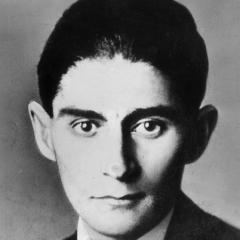
Franz Kafka
Franz Kafka

Franz Kafka (July 3, 1883 - June 3, 1924) was an important German-language novelist of the 20th century, known for his unique literary style and profound philosophical thoughts. His works, often themed around loneliness, alienation, and existentialism, have had a profound impact on literature and philosophy. more

You May Also Like

“I wonder if there has been a book written on toes—the bottom parts of a body are just as important as the top parts. Each chapter would focus on one of the ten toes and each would inspire singular, existential commentary: the potential of our toes as leaders, the solidity of our little instruments, the dangers of relating size and value. It would be called The Toe Manifesto and people would be interested in reading it because, after all, it is the toe that goes forward first and foremost, and the toe that helps to tell us if our bodies are hot or cold—in other words, the toe experiences far more than we give it credit for.”

“He looked down at baby Jesus’ feet and could see the etched marks of previously grazed fingers. Everyone loved to adore the feet of statues. And Andrei could see why—baby Jesus had adorable toes. Andrei turned back at the older Jesus on the cross, hanging from the ceiling, and looked at his feet that were nailed. There was something about feet that never aged. Even with a little hair, feet seemed the body part of human beings that lived unblemished and pure. Their evolution had not gone far from what they were before, growing merely in size and always coveting that soft layer of perfect, glistening skin wrapped over veins. They were a part of the body men could trust—a piece of flesh that stayed childish and weird. The heel was not only the closest contact one had with the earth, but one of the most untouched areas of the body. Few people cup their hands to hold another’s heel. The heel was always away, underneath the fabric of a sock, on the bottom of one’s anatomy, deep down and far from immediate openings for conventional contact such as the hands, arms, and lips. A deep impression remained in Andrei: the image of man’s feet was quite angelic.”