Quotessence
Home / Quotes / Quote by Aristotle

Quote by Aristotle

“Music directly imitates the passions or states of the soul...when one listens to music that imitates a certain passion, he becomes imbued withthe same passion; and if over a long time he habitually listens to music that rouses ignoble passions, his whole character will be shaped to an ignoble form.”

Quote by Aristotle

Author
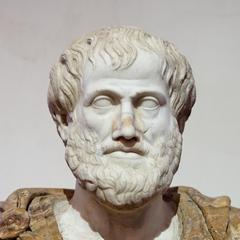
Aristotle
Aristotle

Aristotle, a renowned Greek philosopher, is one of the founders of Western philosophy. His thoughts covered a wide range of fields, including ethics, logic, politics, and had a profound impact on the world. more

You May Also Like

“No country upon earth ever had it more in its power to attain these blessings than United America. Wondrously strange, then, and much to be regretted indeed would it be, were we to neglect the means and to depart from the road which Providence has pointed us to so plainly; I cannot believe it will ever come to pass.”

“We are either a United people, or we are not. If the former, let us, in all maters of general concern act as a nation, which have national objects to promote, and a national character to support. If we are not, let us no longer act a farce by pretending to it.”

“Every man who loves peace, every man who loves his country, every man who loves liberty ought to have it ever before his eyes that he may cherish in his heart a due attachment to the Union of America and be able to set a due value on the means of preserving it.”

“Let the American youth never forget, that they possess a noble inheritance, bought by the toils, and sufferings, and blood of their ancestors; and capacity, if wisely improved, and faithfully guarded, of transmitting to their latest posterity all the substantial blessings of life, the peaceful enjoyment of liberty, property, religion, and independence.”

“Is it not the glory of the people of America, that whilst they have paid a decent regard to the opinions of former times and other nations, they have not suffered a blind veneration for antiquity, for custom, or for names, to overrule the suggestions of their own good sense, the knowledge of their own situation, and the lessons of their own experience? To this manly spirit, posterity will be indebted for the possession, and the world for the example of the numerous innovations displayed on the American theatre, in favor of private rights and public happiness.”

“I shall rejoin myself to my native country, with new attachments, and with exaggerated esteem for its advantages; for though there is less wealth there, there is more freedom, more ease, and less misery.”

“The steady character of our countrymen is a rock to which we may safely moor; and notwithstanding the efforts of the papers to disseminate early discontents, I expect that a just, dispassionate and steady conduct, will at length rally to a proper system the great body of our country. Unequivocal in principle, reasonable in manner, we shall be able I hope to do a great deal of good to the cause of freedom & harmony.”

“What America needs is to hold to its ancient and well-charted course. Our country was conceived in the theory of local self-government. It has been dedicated by long practice to that wise and beneficent policy. It is the foundation principle of our system of liberty. It makes the largest promise to the freedom and development of the individual. Its preservation is worth all the effort and all the sacrifice that it may cost.”

“Nations are beginning to look to some vague organization, some nebulous course of humanity, to pay their bills and tell them what to do. This is not local self-government. It is not American. It is not the method which has made this country what it is. We can not maintain the western standard of civilization on that theory. If it is supported at all, it will have to be supported on the principle of individual responsibility.”