Quotessence
Home / Quotes / Quote by Samuel Adams

Quote by Samuel Adams

“No people ever yet groaned under the heavy yoke of slavery, but when they deserv'd it. ...The truth is, all might be free if they valued freedom, and defended it as they ought. ...If therefore a people will not be free; if they have not virtue enough to maintain their liberty against a presumptuous invader, they deserve no pity, and are to be treated with contempt and ignominy.”

Quote by Samuel Adams

Author
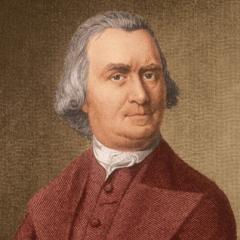
Samuel Adams
Samuel Adams

Samuel Adams was a prominent figure during the American Revolutionary War and is considered one of the Founding Fathers of the United States. Born on September 27, 1722, and died on October 2, 1803, Adams played a crucial role in the American independence movement. He was a political leader in the Massachusetts colony and one of the drafters of the United States Constitution. more

You May Also Like

“People are less than whole unless they gather themselves voluntarily into groups of souls in harmony. Gathering themselves to pursue individual, family, and community dreams consistent with their private humanity is what makes them whole; only slaves are gathered by others.”

“Looking back on a 30-year teaching career full of rewards and prizes, somehow I can't completely believe that I spent my time on earth institutionalized; I can't believe that centralized schooling is allowed to exist at all as a gigantic indoctrination and sorting machine, robbing people of their children. Did it really happen? Was this my life? God help me.”

“Discussing the attempts of Augustus' generals to add to the extent of the Roman Empire early in his reign: The northern countries of Europe scarcely deserved the expense and labour of conquest. The forests and morasses of Germany were filled with a hardy race of barbarians, who despised life when it was separated from freedom; and though, on the first attack, they seemed to yield to the weight of the Roman power, they soon, by a signal act of despair, regained their independence, and reminded Augustus of the vicissitude of fortune.”