Quotessence
Home / Quotes / Quote by Polly Allen Mellen

Quote by Polly Allen Mellen

“One day, Sally Kirkland said to Diana Vreeland, who was the fashion editor of Harper's Bazaar at the time, "I have a young woman I want you to meet. She's very young, but I think you should meet her." When Sally Kirkland told me this, I said, "I can't possibly do that! I'm going to throw up! That's the scariest thing I've ever heard! I can't do that, Sally. I'm not ready to do that!" But Sally said, "You let them make that decision." I was absolutely terrified.”

Quote by Polly Allen Mellen

Author
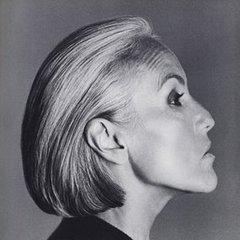
Polly Allen Mellen
Polly Allen Mellen

Polly Allen Mellen, born on June 18, 1924, is an enigmatic figure with an unknown profession and category. more

You May Also Like

“I was surrounded by talented people. I always remember Mrs. Carmel Snow, saying to me, "You know, Polly, if one person thinks they're a big star, then we're all stars. You just go out there and always do your best. And always have time to see any designer - no matter how big or how small, have time to see them. You don't have to just see the big shots. You never know what's coming around the corner and the talent that is going to be important. That is your job."”

“My mother had a definite influence on my leadership style. She was very involved in the community. She would say that whenever you run into challenges or you're trying to make things happen, you've got to understand what makes people tick, what motivates them. Even though she was a business major in college, I think psychology was more of a passion for her.”

“Throughout my career, I had a lot of mentors, and I just adopted them. What I found is that, especially if you're young, when you go up to people and say, 'Would you mind being my mentor?,' their eyes widen. They literally step back. What they're thinking about is the commitment and time involved if they say yes. And time is something they don't have. So I would not ask them to be my mentor, but I would just start treating them like it. And that worked very well for me.”

“I find that a lot of people don't take the advice they're given. But I would do what they suggested, and then follow up with them and say: "Hey, thanks so much. Here's what I did. It worked out great." Now what happens? They feel pretty good about giving you the advice because they had a positive impact. So when I reach out to them again, they're more likely to actually respond to my e-mail or my call. And then they might be more willing to have coffee with me.”

“When people come to you with problems or challenges, don't automatically solve them. As a mama bear, you want to take care of your cubs, so you tend to be protective and insulate them against all those things. But if you keep solving problems for your people, they don't learn how to actually solve problems for themselves, and it doesn't scale. Make sure that when people come in with challenges and problems, the first thing you're doing is actually putting it back to them and saying: "What do you think we should do about it? How do you think we should approach this?".”

“I think people in general don't take enough risks. Some people feel that before they can take on that next challenge they need to be 100 percent ready. It's just not true. Even people in their jobs aren't perfect at their jobs. So my biggest advice to people is to step out there. Take the risk and deal with it. What is the worst that could happen? It's about thriving on risk instead of shrinking from risk.”

“Business people face increasing pressure from local and global competitors. They face customers who have more and more information about alternatives and more and more access to suppliers from all over the world. Given these pressures, business people are looking for approaches that make sense and will continue to make sense. I think many are fed up with management fads that may or may not provide any benefit and don't continue to work over time.”