Quotessence
Home / Quotes / Quote by Madeleine L'Engle

Quote by Madeleine L'Engle

Work

The Crosswicks Journals: A Circle of Quiet, The Summer of the Great-Grandmother, The Irrational Season, and Two-Part Invention

This compilation includes four works by the author Madeleine L'Engle, each offering a unique perspective on life's complexities and the human spirit. 'The Crosswicks Journals: A Circle of Quiet' delves into the quiet moments of life, 'The Summer of the Great-Grandmother' focuses on family history and loss, 'The Irrational Season' addresses the unpredictability of life, and 'Two-Part Invention' combines personal narrative with reflections on creativity and faith. more

Author
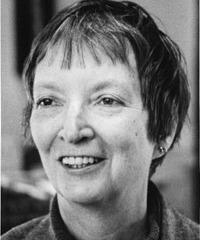
Madeleine L'Engle
Madeleine L'Engle

American writer, born on November 29, 1918, and died on September 6, 2007. Madeleine L'Engle is renowned for her science fiction and fantasy novels, with her most famous work being 'A Wrinkle in Time'. more

You May Also Like

“The natural sciences are sometimes said to have no concern with values, nor to seek morality and goodness, and therefore belong to an inferior order of things. Counter-claims are made that they are the only living and dynamic studies... Both contentions are wrong. Language, Literature and Philosophy express, reflect and contemplate the world. But it is a world in which men will never be content to stay at rest, and so these disciplines cannot be cut off from the great searching into the nature of things without being deprived of life-blood.”

“Seriously, if you complain about going to a Paris fashion show, you have officially lost all perspective on life as we know it. And I have little kids who are hard to be away from sometimes when school's going back and there are tons of things that you're missing. But you know, there's that great Billie Jean King expression: "Pressure is a privilege." We can all deal.”

“To assert that it is possible to establish peace between men of different nations is simply to assert that man, whatever his ethnical background, his race, religious beliefs, or philosophy, is capable of reason. Two forces within the individual contribute to the development of his conscience and of his morality: reason and sensitivity.”