Quotessence
Home / Quotes / Quote by Ira Progoff

Quote by Ira Progoff

“Man does indeed know intuitively more than he rationally understands. The question, however , is how we can gain access to the potentials of the knowledge contained in the depth of us, how we can achieve increased capacities of direct intuition and enlarged awareness.”

Quote by Ira Progoff

Author
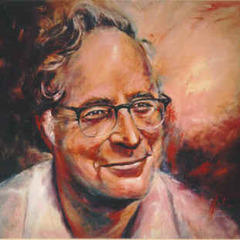
Ira Progoff
Ira Progoff

Ira Progoff was a renowned psychotherapist, born on August 2, 1921, and passed away on January 1, 1998. He had a significant impact in the field of psychotherapy, particularly known for his work with psychodrama and psychodramatic therapy techniques. more

You May Also Like

“The genius of Freemasonry is not our Masonic buildings and temples or the trappings of our organizations. It is not our great charities or community activities. It is not our beautiful rituals or their teachings! It is the 'practice of Freemasonry' by the Freemasons. Yet we cannot practice that which we do not know or understand. Thus Masonic education is the foundation for our Fraternity. Brother Carl H. Claudy in The Master's Book says, '.. one thing and only one thing a Masonic Lodge can give its members which they can get nowhere else in the world. That one thing is Masonry.”

“Wherever there is a human being, I see God-given rights inherent in that being, whatever may be the sex or complexion.”

“This human need for mysticism – surrender to an unknown truth, union – stands at the helm of all romantic feeling. It is, in essence, the same intimacy known in a mother’s arms; in those who are deprived of the experience, the need freezes and, distorted, it can rent a life. All addiction has as its foundation skewed yearning for the same transcendence. For me, the spell of the material was broken by my brother’s death; after his suicide, all I wanted was the renewal of my connection to the intangible.”

“Sometimes I hear the world discussed as the realm of men. This is not my experience. I have watched men fall to the ground like leaves. They were swept up as memories, and burned. History owns them. These men were petrified in both senses of the word: paralyzed and turned to stone. Their refusal to express feeling killed them. Anachronistic men. Those poor, poor boys.”

“My generation was, in effect, the product of a social experiment. If we did not understand marital intimacy, it was because we had not seen it modelled. We lurched from relationship to relationship, dazzled by the newness of meaninglessness, relentless in our search for something even the most perceptive of us could not identify.”