Quotessence
Home / Quotes / Quote by Walter Lippmann

Quote by Walter Lippmann

“The central drama of our age is how the Western nations and the Asian peoples are to find a tolerable basis of co-existence.”

Quote by Walter Lippmann

Author
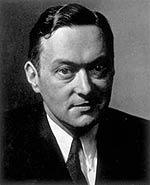
Walter Lippmann
Walter Lippmann

Walter Lippmann was a prominent American writer and political commentator, born on September 23, 1889, and died on December 14, 1974. He was known for his profound insights into political and social issues and was one of the most influential political analysts in the United States during the 20th century. more

You May Also Like

“I generalized rashly: That is what kills political writing, this absurd pretence that you are delivering a great utterance. You never do. You are just a puzzled man making notes about what you think. You are not building the Pantheon, then why act like a graven image? You are drawing sketches in the sand which the sea will wash away.”

“Unless democracy is to commit suicide by consenting to its own destruction, it will have to find some formidable answer to those who come to it saying: I demand from you in the name of your principles the rights which I shall deny to you later in the name of my principles.”

“In really hard times the rules of the game are altered. The inchoate mass begins to stir. It becomes potent, and when it strikes, it strikes with incredible emphasis. Those are the rare occasions when a national will emerges from the scattered, specialized, or indifferent blocs of voters who ordinarily elect the politicians. Those are for good or evil the great occasions in a nation's history.”

“The opposition is indispensable. A good statesman, like any other sensible human being, always learns more from his opponents than from his fervent supporters. For his supporters will push him to disaster unless his opponents show him where the dangers are. So if he is wise he will often pray to be delivered from his friends, because they will ruin him. But though it hurts, he ought also to pray never to be left without opponents; for they keep him on the path of reason and good sense.”

“The man who will follow precedent, but never create one, is merely an obvious example of the routineer. You find him desperately numerous in the civil service, in the official bureaus. To him government is something given as unconditionally, as absolutely as ocean or hill. He goes on winding the tape that he finds. His imagination has rarely extricated itself from under the administrative machine to gain any sense of what a human, temporary contraption the whole affair is. What he thinks is the heavens above him is nothing but the roof.”

“The decay of decency in the modern age, the rebellion against law and good faith, the treatment of human beings as things, as the mere instruments of power and ambition, is without a doubt the consequence of the decay of the belief in man as something more than an animal animated by highly conditioned reflexes and chemical reactions. For, unless man is something more than that, he has no rights that anyone is bound to respect, and there are no limitations upon his conduct which he is bound to obey.”

“The ordinary politician has a very low estimate of human nature. In his daily life he comes into contact chiefly with persons who want to get something or to avoid something. Beyond this circle of seekers after privileges, individuals and organized minorities, he is aware of a large unorganized, indifferent mass of citizens who ask nothing in particular and rarely complain. The politician comes after a while to think that the art of politics is to satisfy the seekers after favors and to mollify the inchoate mass with noble sentiments and patriotic phrases.”