“Love works in a circle, for the beloved moves the lover by stamping a likeness, and the lover then goes out to hold the beloved inreality. Who first was the beginning now becomes the end of motion.”
Book:Philosophical Texts
“Love works in a circle, for the beloved moves the lover by stamping a likeness, and the lover then goes out to hold the beloved inreality. Who first was the beginning now becomes the end of motion.”
This book encompasses a range of philosophical texts, including essays, treatises, and discussions on topics such as ethics, metaphysics, epistemology, and logic. It offers insights into the thoughts and theories of numerous philosophers throughout history. more
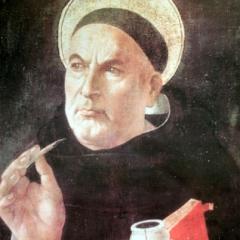
Thomas Aquinas, born on January 28, 1225 and died on March 7, 1274, was a renowned theologian, philosopher, and priest. He is considered one of the greatest theologians of the Middle Ages and his works have had a profound impact on philosophy and theology. more
“To disparage the dictate of reason is equivalent to contemning the command of God.”
“Mistakes are made on two counts: an argument is either based on error or incorrectly developed.”