Quotessence
Home / Quotes / Quote by James T. Shotwell

Quote by James T. Shotwell

“The Jews emerge into history, not a nation of keen spiritual aspirations and altruistic ethics, but that pagan people, worshipping rocks, sheep and cattle, and spirits of caves and wells, of whom the Old Testament, tending towards its higher ideal, gives fragmentary but convincing evidence.”

Quote by James T. Shotwell

Author
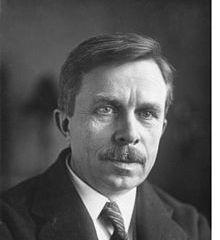
James T. Shotwell
James T. Shotwell

James T. Shotwell was a significant figure in the [Unknown Category] field. Born on August 6, 1874, and passing away on July 15, 1965, he was renowned for his unique perspective and profound expertise. His contributions and influence in [Field] have had a lasting impact. more

You May Also Like

“I believe strongly in the Constitutional principle of separating church and state. Our founders were right in fearing that religious freedom would be threatened in the long run by a departure from governmental neutrality in spiritual matters.”

“Man stands alone in the universe, a unique product of a long, unconscious, impersonal, material process with unique understanding and potentialities. These he owes to no one but himself, and it is to himself that he is responsible. He is not the creature of uncontrollable and undeterminable forces, but is his own master. He can and must decide and manage his own destiny.”

“An important tradition within westren philosophy believes in the primacy of natural science as a guide to truth. This is sometimes met with the charge that such an allegiance amounts to scientism - the view that the only things that really exist are those recognized by fundamental physical theory, and that the only forms of genuine knowledge are scientific ones.”

“A willingness to engage in the give and take of argument displays a commitment to cognitive egalitarianism - the proposition that all people should be treated as intellectual equals, and that no individual can legitimately claim a privileged immunity from the burden of proof.”

“The significant contribution of empiricism was not the eradication of certainty, but the eradication of infallibility as a criterion of certainty. And this shift from infallibilism to fallibilism has profound consequences not only for toleration, but also for the subordination of faith to reason and theology to philosophy.”