Quotessence
Home / Quotes / Quote by Sargent Shriver

Quote by Sargent Shriver

“I believe strongly in the Constitutional principle of separating church and state. Our founders were right in fearing that religious freedom would be threatened in the long run by a departure from governmental neutrality in spiritual matters.”

Quote by Sargent Shriver

Author
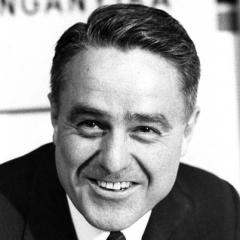
Sargent Shriver
Sargent Shriver

Sargent Shriver was an American statesman and diplomat who served as the U.S. ambassador to France under President John F. Kennedy. He was also the first director of the Peace Corps and the father of Maria Shriver, the television journalist. Born on November 9, 1915, Shriver passed away on January 18, 2011. more

You May Also Like

“Man stands alone in the universe, a unique product of a long, unconscious, impersonal, material process with unique understanding and potentialities. These he owes to no one but himself, and it is to himself that he is responsible. He is not the creature of uncontrollable and undeterminable forces, but is his own master. He can and must decide and manage his own destiny.”

“An important tradition within westren philosophy believes in the primacy of natural science as a guide to truth. This is sometimes met with the charge that such an allegiance amounts to scientism - the view that the only things that really exist are those recognized by fundamental physical theory, and that the only forms of genuine knowledge are scientific ones.”

“A willingness to engage in the give and take of argument displays a commitment to cognitive egalitarianism - the proposition that all people should be treated as intellectual equals, and that no individual can legitimately claim a privileged immunity from the burden of proof.”

“The significant contribution of empiricism was not the eradication of certainty, but the eradication of infallibility as a criterion of certainty. And this shift from infallibilism to fallibilism has profound consequences not only for toleration, but also for the subordination of faith to reason and theology to philosophy.”

“The leap of faith is a strategic impasse that confronts every Christian in search of converts; and, as he sees the matter, there is no wrong way to become a Christian. It is the end that is importnat, not the means; it does not matter why you believe, so long as you believe. For the philosopher, in contrast, the paramount issue is the justification of belief, not the fact of belief itself.”