Quotessence
Home / Quotes / Quote by George Lakoff

Quote by George Lakoff

“...there is no real person whose embodiment plays no role in meaning, whose meaning is purely objective and defined by the external world, and whose language can fit the external world with no significant role played by mind, brain, or body. Because our conceptual systems grow out of our bodies, meaning is grounded in and through our bodies. Because a vast range of our concepts are metaphorical, meaning is not entirely literal and the classical correspondence theory of truth is false.”

Quote by George Lakoff

Work

Philosophy in the Flesh: The Embodied Mind and Its Challenge to Western Thought

This book delves into the concept of the embodied mind, examining how our physical experiences shape our philosophical understanding and challenge traditional Western thought. more

Author
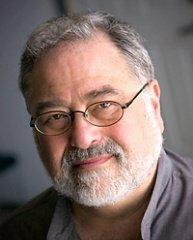
George Lakoff
George Lakoff

George Lakoff, born on May 24, 1941, is an American cognitive linguist. His research focuses on the relationship between language and thought, and he has made significant contributions to the field of linguistics with his theories on cognitive linguistics. more

You May Also Like

“No more light answers. Let our officers Have note what we purpose. I shall break The cause of our expedience to the Queen And get her leave to part. For not alone The death of Fulvia, with more urgent touches, Do strongly speak to us, but the letters too Of many our contriving friends in Rome Petition us at home. Sextus Pompeius Hath given the dare to Caesar and commands The empire of the sea. Our slippery people, Whose love is never linked to the deserver Till his deserts are past, begin to throw Pompey the Great and all his dignities Upon his son, who - high in name and power, Higher than both in blood and life - stands up For the main soldier; whose quality, going on, The sides o' th' world may danger. Much is breeding Which, like the courser's hair, hath yet but life And not a serpent's poison.”

“Speech is the pen and the sword of humankind and it is the foundation of their kingdom. Wherever the flag of speech waves, the most powerful armies are. defeated and scattered. In the arenas in which speech shouts out, the sounds of cannon balls become like the buzzing of bees. from behind the battlements on which the banner of speech has been raised, the sound of its drums are heard. In the precincts where its march reverberates, kings shake in their boots. The Master of Speech smashed to pieces many insurmountable walls, in the face of which Alexander the Great, Napoleon, and many others despaired or retread; and the pen of Speech, imparting and compliance, was saluted and praised.”

“In asking philosophical questions, we use a reason shaped by the body, a cognitive unconscious to which we have no direct access, and metaphorical thought of which we are largely unaware. The fact that abstract thought is mostly metaphorical means that answers to philosophical questions have always been, and always will be, mostly metaphorical. In itself, that is neither good nor bad. It is simply a fact about the capacities of the human mind. But it has major consequences for every aspect of philosophy. Metaphorical thought is the principal tool that makes philosophical insight possible and that constrains the forms that philosophy can take.”

“The mechanism by which spirituality becomes passionate is metaphor. An ineffable God requires metaphor not only to be imagined but to be approached, exhorted, evaded, confronted, struggled with, and loved. Through metaphor, the vividness, intensity, and meaningfulness of ordinary experiences becomes the basis of a passionate spirituality. An ineffable God becomes vital through metaphor: The Supreme Being. The Prime Mover. The Creator. The Almighty. The Father. The King of Kings. Shepherd. Potter. Lawgiver. Judge. Mother. Lover. Breath. The vehicle by which we are moved in passionate spirituality is metaphor. The mechanism of such metaphor is bodily. It is a neural mechanism that recruits our abilities to perceive, to move, to feel, and to envision in the service not only of theoretical and philosophical thought, but of spiritual experience.”

“So this is the boom, eh?” I said. “Not exactly Scott Fitzgerald, is it?” “I’ll tell you what it’s like,” he said glumly. “It’s like being in Caligula’s Rome, and everyone around you’s having an orgy, and you’re the mug stuck looking after the horse.” He pulled heavily on his cigarette. “The whole thing’ll come crashing down,” he said bleakly, “and all anyone’ll have done is eaten a lot of expensive cheese.”