Quotessence
Home / Quotes / Quote by David Sheff

Quote by David Sheff

“A handsome woman with auburn hair cut short, wearing a silk blouse, cardigan, and wool pants, says that she is a doctor. Deeply sad, she admits that for more than a year she conducted surgeries while high on meth. She initially tried it at a party. "I felt better than I had ever felt before in my life," she says. "I felt as if I could do anything. I never ever wanted to lose that feeling.”

Quote by David Sheff

Work

Beautiful Boy: A Father's Journey Through His Son's Addiction

This book delves into the emotional and psychological challenges faced by a parent as they navigate their child's addiction. The story offers an intimate look at the impact of addiction on family dynamics and the relentless pursuit of hope and healing. more

Author
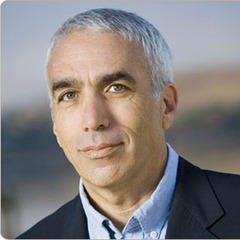
David Sheff
David Sheff

David Sheff is an American author recognized for his works on addiction and recovery. Born on December 23, 1955, he has written extensively on the subject of drug abuse, particularly focusing on the experiences of his son, Nic Sheff, who struggled with addiction. His books have received critical acclaim and have contributed significantly to the public discourse on addiction. more

You May Also Like

“As if they are a mountaineer climbing across the great slopes of Mount Everest, meth monkeys take quite the health risk. Their minds become mush due to sleep deprivation. Like pillows with way too many hours of sleep invested into them, these minds exhaust themselves and become overworked. Like that of old television shows, their minds become reruns on repeat.”

“She reaches down into her bulging tote bag and pulls out a small plastic box with a hinged lid. It contains a round pill box with a threaded lid from which she tips out a vitamin pill, a fish-oil pill, and the enzyme tablet that lets her stomach digest milk. Inside the hinged plastic box she also carries packets of salt, pepper, horseradish, and hand-wipes, a doll size bottle of Tabasco sauce, chlorine pills for treating drinking water, Pepto-Bismol chews, and God knows what else. If you go to a concert, Bina has opera glasses. If you need to sit on the grass, she whips out a towel. Ant traps, a corkscrew, candles and matches, a dog muzzle, a penknife, a tiny aerosol can of freon, a magnifying glass - Landsman has seen everything come out of that overstuffed cowhide at one time or another.”

“...note that relational systems require only that the database be perceived by the user as tables. Tables are the logical structure in a relational system, not the physical structure. At the physical level, in fact, the system is free to store the data any way it likes—using sequential files, indexing, hashing, pointer chains, compression, and so on—provided only that it can map that stored representation to tables at the logical level. Another way of saying the same thing is that tables represent an abstraction of the way the data is physically stored—an abstraction in which numerous storage level details (such as stored record placement, stored record sequence, stored data value representations, stored record prefixes, stored access structures such as indexes, and so forth) are all hidden from the user. ... The Information Principle: The entire information content of the database is represented in one and only one way—namely, as explicit values in column positions in rows in tables. This method of representation is the only method available (at the logical level, that is) in a relational system. In particular, there are no pointers connecting one table to another.”

“■ Types are (sets of) things we can talk about. ■ Relations are (sets of) things we say about the things we can talk about. (There is a nice analogy here that might help you appreciate and remember these important points: Types are to relations as nouns are to sentences.) Thus, in the example, the things we can talk about are employee numbers, names, department numbers, and money values, and the things we say are true utterances of the form “The employee with the specified employee number has the specified name, works in the specified department, and earns the specified salary.” It follows from all of the foregoing that: 1. Types and relations are both necessary (without types, we have nothing to talk about; without relations, we cannot say anything). 2. Types and relations are sufficient, as well as necessary—i.e., we do not need anything else, logically speaking. 3. Types and relations are not the same thing. It is an unfortunate fact that certain commercial products—not relational ones, by definition!—are confused over this very point.”

“...SQL is very far from being the “perfect” relational language—it suffers from numerous sins of both omission and commission. ...the overriding issue is simply that SQL fails in all too many ways to support the relational model properly. As a consequence, it is not at all clear that today's SQL products really deserve to be called “relational” at all! Indeed, as far as this writer is aware, there is no product on the market today that supports the relational model in its entirety. This is not to say that some parts of the model are unimportant; on the contrary, every detail of the model is important, and important, moreover, for genuinely practical reasons. Indeed, the point cannot be stressed too strongly that the purpose of relational theory is not just “theory for its own sake”; rather, the purpose is to provide a base on which to build systems that are 100 percent practical. But the sad fact is that the vendors have not yet really stepped up to the challenge of implementing the theory in its entirety. As a consequence, the “relational” products of today regrettably all fail, in one way or another, to deliver on the full promise of relational technology.”