Quotessence
Home / Quotes / Quote by Virginia Woolf

Quote by Virginia Woolf

“Whatever may be their use in civilised societies, mirrors are essential to all violent and heroic action. That is why Napoleon and Mussolini both insist so emphatically upon the inferiority of women, for if they were not inferior, they would cease to enlarge. That serves to explain in part the necessity that women so often are to men. And it serves to explain how restless they are under her criticism; how impossible it is for her to say to them this book is bad, this picture is feeble, or whatever it may be, without giving far more pain and rousing far more anger than a man would do who gave the same criticism. For if she begins to tell the truth, the figure in the looking-glass shrinks; his fitness for life is diminished. How is he to go on giving judgement, civilising natives, making laws, writing books, dressing up and speechifying at banquets, unless he can see himself at breakfast and at dinner at least twice the size he really is?”

Quote by Virginia Woolf

Work

A Room of One’s Own

Browse quotes and source details for this work. more

Author
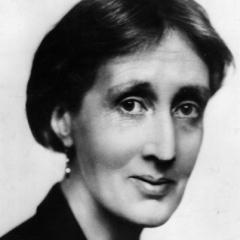
Virginia Woolf
Virginia Woolf

British modernist writer, known for her unique narrative techniques and profound portrayal of female experience. Her works include 'To the Lighthouse' and 'Mrs. Dalloway'. more

You May Also Like

“A just society is one that allows all of its members access to the widest possible range of fundamental goods. Fundamental goods include education, health, the right to vote, and more generally to participate as fully as possible in the various forms of social, cultural, economic, civic, and political life. A just society organizes socioeconomic relations, property rights, and the distribution of income and wealth in such a way as to allow its least advantaged members to enjoy the highest possible life conditions. A just society in no way requires absolute uniformity or equality. To the extent that income and wealth inequalities are the result of different aspirations and distinct life choices or permit improvement of the standard of living and expansion of the opportunities available to the disadvantaged, they may be considered just. But this must be demonstrated, not assumed, and this argument cannot be invoked to justify any degree of inequality whatsoever, as it too often is.”

“Systems of supremacy and domination ultimately imperil even those who, in many crucial respects, benefit from them. Racism, while it elevates whiteness, is weaponized to erode the welfare and wages that would enable white people to lead healthier, less precarious lives. Misogyny hurts men economically and emotionally, as gendered pay gaps suppress overall wages and through the trap of destructive and often violent standards of masculinity. Transphobia impacts everyone by imposing state-sponsored gender norms and curtailing freedom and self-expression. Ableism, by devaluing and dehumanizing the disabled, dissuades people from demanding the social services and public assistance they need as they cope with illness or aging. The inequality and pursuit of endless growth that drive climate change endanger the homes, infrastructure, and supply chains on which the wealthy and working class both rely—not to mention the complex ecosystems in which we are all embedded. Solidarity, in other words, is not selfless. Siding with others is the only way to rescue ourselves from the catastrophes that will otherwise engulf us.”

“New sciences developed, based on observation of the real world, rather than speculation. Rational thought was valued over inspiration, and logic over magic. All the natural world was closely observed and recorded by self-styled "scientists" who thought that the rich diversity in nature would be understood by being defined and categorized. The diversity of human beings, the one human body, that could have both male and female qualities, and change from female to male, did not fit this new hunger for precise and limited labeling. The new philosophers decided that there were only two sexes, fixed and unchanging, completely opposite, male and female, normal and other. They saw this simple binary model because they favored it. They found it because they looked for it, because it fitted their ideas of male and female status. When they saw behaviors or nature that did not support a rigid binary model, they explained them away. The changing sex of the developing fetus, the presence of all the sex organs in early development was ignored. Two sexes, completely opposite, were never a genuine observation, supported by all the other evidence, but an intellectual fashion, in all modernizing Europe thought, invented to explain and justify sexual inequality.”