Quotessence
Home / Quotes / Quote by Greg Mortenson

Quote by Greg Mortenson

Work

Author

Greg Mortenson
Greg Mortenson

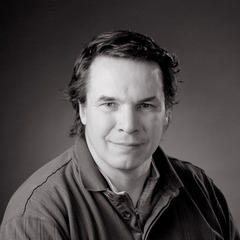
Greg Mortenson is a humanitarian known for his work on educational and medical projects in Pakistan and Afghanistan. He has gained widespread recognition for his efforts in these regions, particularly for his book 'Three Cups of Tea', which details his experiences and achievements. more

You May Also Like

“What people still do not like to admit is that there were two crimes in the form of one. Just as the destruction of Jewry was the necessary condition for the rise and expansion of Nazism, so the ethnic cleansing of Germans was a precondition for the Stalinization of Poland. I first noticed this point when reading an essay by the late Ernest Gellner, who at the end of the war had warned Eastern Europeans that collective punishment of Germans would put them under Stalin's tutelage indefinitely. They would always feel the guilty need for an ally against potential German revenge.”

“A man who says that no patriot should attack the [war] until it is over is not worth answering intelligently; he is saying that no good son should warn his mother off a cliff until she has fallen over it. But there is an anti-patriot who honestly angers honest men…he is the uncandid candid friend; the man who says, "I am sorry to say we are ruined," and is not sorry at all…Granted that he states only facts, it is still essential to know what are his emotions, what is his motive. It may be that twelve hundred men in Tottenham are down with smallpox; but we want to know whether this is stated by some great philosopher who wants to curse the gods, or only by some common clergyman who wants to help the men.”

“Maybe we’ll evolve to a point where fear as an experience is no longer instinctual, but rather an emotion we use to enrich our understanding of why our human ancestors killed each other when they could have loved each other. One day we’ll be holding hands instead of grudges; we’ll eliminate our territorial circuits and know what love is. One day we’ll be holding hands instead of M-16s.”

“All this occupied his thoughts when he revisited the places of his war. Tramping over soil fed by the blood of men he had led and whose faces now stirred in his memory, it was his wife's response that came - as if in compensation for too little said before - when he wondered why his wandering had led him back to these old battlefields: in his sixty-ninth year he was establishing his survivor's status.”