Quotessence
Home / Quotes / Quote by Leo Tolstoy

Quote by Leo Tolstoy

“The old oak, utterly transformed, draped in a tent of sappy dark green, basked faintly, undulating in the rays of the evening sun. Of the knotted fingers, the gnarled excrecenses, the aged grief and mistrust- nothing was to be seen. Through the rough, century-old bark, where there were no twigs, leaves had burst out so sappy, so young, that is was hard to believe that the aged creature had borne them. "Yes, that is the same tree," thought Prince Andrey, and all at once there came upon him an irrational, spring feeling of joy and renewal. All the best moments of his life rose to his memory at once. Austerlitz, with that lofty sky, and the dead, reproachful face of his wife, and Pierre on the ferry, and the girl, thrilled by the beauty of the night, and that night and that moon- it all rushed at once into his mind.”

Quote by Leo Tolstoy

Work

War and Peace

A profound and sweeping narrative that delves into the complexities of human relationships and the impact of historical events on individuals, "War and Peace" is renowned for its rich character development and intricate portrayal of the Napoleonic era. more

Author
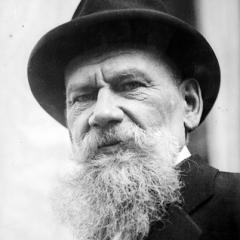
Leo Tolstoy
Leo Tolstoy

Leo Tolstoy was a Russian writer and thinker, a prominent representative of 19th-century Russian literature. His works deeply revealed social contradictions and human nature, and had a profound impact on the world. more

You May Also Like

“In America, alas, beauty has become something you drive to, and nature an either/or proposition--either you ruthlessly subjugate it, as at Tocks Dam and a million other places, or you deify it, treat it as something holy and remote, a thing apart, as along the Appalachian Trail. Seldom would it occur to anyone on either side that people and nature could coexist to their mutual benefit--that, say, a more graceful bridge across the Delaware River might actually set off the grandeur around it, or that the AT might be more interesting and rewarding if it wasn't all wilderness, if from time to time it purposely took you past grazing cows and till fields.”

“This is the truth: we all desire to conquer the comely one, because it affirms our own worth. Speaking for the men of the world, we want to own the beauty of the woman we're fucking. We want to grasp that beauty, tightly in our greedy little fingers, to well and truly possess it, to make it ours. We want to do this as the woman shines her way through an orgasm. That's perfection. And while I can't speak for women, I imagine that they-whether they admit it or not-want the same thing: to possess the man, to own his rough handsomeness, if only for a few seconds.”

“We Orientals tend to seek our satisfactions in whatever surroundings we happen to find ourselves, to content ourselves with things as they are; and so darkness causes us no discontent, we resign ourselves to it as inevitable. If light is scarce, then light is scarce; we will immerse ourselves in the darkness and there discover its own particular beauty. But the progressive Westerner is determined always to better his lot. From candle to oil lamp, oil lamp to gaslight, gaslight to electric light—his quest for a brighter light never ceases, he spares no pains to eradicate even the minutest shadow.”

“Beauty promises recognition, connection, and loftiness. It invites us to soar and transcend. Beauty lends magnitude to our lives, but we feel dislocated if we miss sense and substance. Its absence is like a fall from grace. Beauty is one of the last refuges against emptiness. Without it, we become void drifters in a barren world. (“Absence of Beauty is like Hell“ )”

“To be beautiful, handsome, means that you possess a power which makes all smile upon and welcome you; that everybody is impressed in your favor and inclined to be of your opinion; that you have only to pass through a street or to show yourself at a balcony to make friends and to win mistresses from among those who look upon you. What a splendid, what a magnificent gift is that which spares you the need to be amiable in order to be loved, which relieves you of the need of being clever and ready to serve, which you must be if ugly, and enables you to dispense with the innumerable moral qualities which you must possess in order to make up for the lack of personal beauty.”