Quotessence
Home / Quotes / Quote by Ursula K. Le Guin

Quote by Ursula K. Le Guin

“There is nothing you can do that profit does not enter into, and fear of loss, and wish for power. You cannot say good morning without knowing which of you is 'superior' to the other, or trying to prove it. You cannot act like a brother to other people, you must manipulate them, or command them, or obey them, or trick them. You cannot touch another person, yet they will not leave you alone. There is no freedom.”

Quote by Ursula K. Le Guin

Work

The Dispossessed: An Ambiguous Utopia

Browse quotes and source details for this work. more

Author
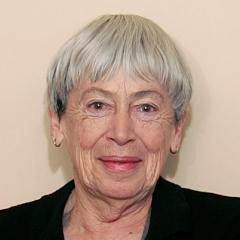
Ursula K. Le Guin
Ursula K. Le Guin

Ursula K. Le Guin, born on October 21, 1929, is an esteemed American author of science fiction and fantasy. Known for her profound philosophical insights, rich imagination, and unique narrative style, Le Guin's works have won numerous literary awards and have had a significant impact on science fiction and fantasy literature. Her most famous works include the 'Earthsea' series and 'The Left Hand of Darkness', which have won her awards such as the Nebula and Hugo Awards, and she has also received the National Book Award for lifetime achievement for her contributions to literature. more

You May Also Like

“Experience should teach us to be most on our guard to protect liberty when the government's purposes are beneficent. Men born to freedom are naturally alert to repel invasion of their liberty by evil-minded rulers. The greatest dangers to liberty lurk in insidious encroachment by men of zeal, well-meaning but without understanding." [Olmstead v. U.S., 277 U.S. 438 (1928) (dissenting)]”

“Since knowledge, thinking, and rational action are properties of the individual, since the choice to exercise his rational faculty or not depends on the individual, man’s survival requires that those who think be free of the interference of those who don’t. Since men are neither omniscient nor infallible, they must be free to agree or disagree, to cooperate or to pursue their own independent course, each according to his own rational judgment. Freedom is the fundamental requirement of man’s mind. A rational mind does not work under compulsion; it does not subordinate its grasp of reality to anyone’s orders, directives, or controls; it does not sacrifice its knowledge, its view of the truth, to anyone’s opinions, threats, wishes, plans, or “welfare.” Such a mind may be hampered by others, it may be silenced, proscribed, imprisoned, or destroyed; it cannot be forced; a gun is not an argument. (An example and symbol of this attitude is Galileo.) It is from the work and the inviolate integrity of such minds—from the intransigent innovators—that all of mankind’s knowledge and achievements have come. (See The Fountainhead.) It is to such minds that mankind owes its survival. (See Atlas Shrugged.)”

“Religion, a mediaeval form of unreason, when combined with modern weaponry becomes a real threat to our freedoms. This religious totalitarianism has caused a deadly mutation in the heart of Islam and we see the tragic consequences in Paris today. I stand with Charlie Hebdo, as we all must, to defend the art of satire, which has always been a force for liberty and against tyranny, dishonesty and stupidity. ‘Respect for religion’ has become a code phrase meaning ‘fear of religion.’ Religions, like all other ideas, deserve criticism, satire, and, yes, our fearless disrespect." [I Stand With Charlie Hebdo, as We All Must (Wall Street Journal, January 7, 2015)]”

“When Muslim radicals and fundamentalists look at the West, they see only the openness that makes us, in their eyes, decadent and promiscuous. They see only the openness that has produced Britney Spears and Janet Jackson. They do not see, and do not want to see, the openness - the freedom of thought and inquiry - that has made us powerful, the openness that has produced Bill Gates and Sally Ride. They deliberately define it all as decadence. Because if openness, women's empowerment, and freedom of thought and inquiry are the real sources of the West's economic strength, then the Arab-Muslim world would have to change. And the fundamentalists and extremists do not want to change.”

“[A]dventures befall the unadventurous as readily, if not as frequently, as the bold. Adventures are a logical and reliable result - and have been since at least the time of Odysseus - of the fatal act of leaving one's home, or trying to return to it again. All adventures happen in that damned and magical space, wherever it may be found or chanced upon, which least resembles one's home. As soon as you have crossed your doorstep or the county line, into that place where the structures, laws, and conventions of your upbringing no longer apply, where the support and approval (but also the disapproval and repression) of your family and neighbors are not to be had: then you have entered into adventure, a place of sorrow, marvels, and regret.”