Quotessence
Home / Quotes / Quote by Bob Kerrey

Quote by Bob Kerrey

Author

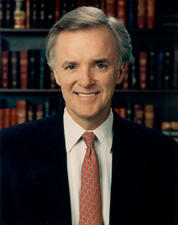
Bob Kerrey
Bob Kerrey

Bob Kerrey, born on August 27, 1943, is an accomplished American politician known for his service as the Governor of Nebraska. He has held various significant positions in his political career, including serving as a U.S. Senator and the President of the Peace Corps. Kerrey has extensive experience in politics and public service, committed to advancing social progress. more

You May Also Like

“All over East Africa-indeed, all over Africa-it is normal for people to walk a kilometer or two or six for water. In more arid areas, people walk even greater distances, and sometimes all they find at the end is a pond slimy with overuse. More than 90 percent of Africans still dig for their water, and waterborne diseases such as typhoid, dysentery, bilharzia, and cholera are common. The bodies of many Africans are a stew of parasites. In some areas the wells are so far below the earth's surface that chains of people are required to pass up the water.”

“The government tells us we need flood control and comes to straighten the creek in our pasture. The engineer on the job tells us the creek is now able to carry off more flood water, but in the process we have lost our old willows where the owl hooted on a winter night and under which the cows switched flies in the noon shade. We lost the little marshy spot where our fringed gentians bloomed.”

“Hydrologists have demonstrated that the meanderings of a creek are a necessary part of the hydrologic functioning. The flood plain belongs to the river. The ecologist sees clearly that for similar reasons we can get along with less channel improvement on Round River.”

“And having thoughtlessly polluted our streams and rivers, we have seen in recent years a rapidly growing market for bottled drinking water. I am sure that some will say that a rapidly growing market for water is "good for the economy," and most of us are still affluent enough to pay the cost. Nevertheless, it is a considerable cost that we are now paying for drinkable water, which we once had in plentiful supply at little cost or none at all. And the increasing of the cost suggests that the time may come when the cost will be unaffordable.”