Quotessence
Home / Quotes / Quote by Nizar Qabbani

Quote by Nizar Qabbani

“Arab children, Corn ears of the future, You will break our chains, Kill the opium in our heads, Kill the illusions. Arab children, Don't read about our suffocated generation, We are a hopeless case. We are as worthless as a water-melon rind. Dont read about us, Dont ape us, Dont accept us, Dont accept our ideas, We are a nation of crooks and jugglers. Arab children, Spring rain, Corn ears of the future, You are the generation That will overcome defeat.”

Quote by Nizar Qabbani

Author
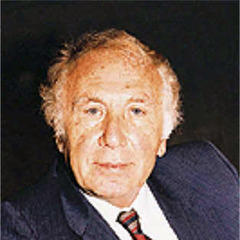
Nizar Qabbani
Nizar Qabbani

Nizar Qabbani was a distinguished Lebanese poet, diplomat, and politician. Born on March 21, 1923, in Damascus, Syria, he spent much of his life in Lebanon. Qabbani's poetry is celebrated for its lyrical beauty and profound social and political commentary. He served as Lebanon's ambassador to France and was a member of the Lebanese parliament. Qabbani received numerous awards for his literary contributions, including the Lenin Peace Prize. He passed away on April 30, 1998. more

You May Also Like

“How much evil throughout history could have been avoided had people exercised their moral acuity with convictional courage and said to the powers that be, 'No, I will not. This is wrong, and I don't care if you fire me, shoot me, pass me over for promotion, or call my mother, I will not participate in this unsavory activity.' Wouldn't world history be rewritten if just a few people had actually acted like individual free agents rather than mindless lemmings?”

“Perhaps his gloom was due to his profession, that he lived among fallen empires, and in reading these languages that had not been spoken by the common man in centuries, he had all about him the ruin of language, evidence of toppled suburbs, grass growing among the mosaics, and voices that had been choked with poison, iron, age, or ash.”

“The boy, who did everything well and with a natural unslumped grace the wraith himself had always lacked, and whom the wraith had been so terribly eager to see and hear and let him (the son) know he was seen and heard, the son had become a steadily more and more hidden boy, toward the wraith's life's end; and no one else in the wraith and the boy's nuclear family would see or acknowledge this, the fact that the graceful and marvelous boy was disappearing, right before their eyes. They looked but did not see his invisibility.”

“Today the logic goes something like this: 'Calling a ruler Son of God is out of style. No one really does that nowadays. We can support a president while also worshiping Jesus as the Son of God.' But how is this possible? For one says that we must love our enemies, and the other says we must kill them; one promotes the economics of competition, while the other admonishes the forgiveness of debts. To which do we pledge allegiance?”

“Again: there is nothing inherently superior about resistance. All our claims for the righteousness of resistance rest on the rightness of the claim that the resisters are acting in the name of justice. And the justice of the cause does not depend on, and is not enhanced by, the virtue of those who make the assertion. It depends first and last on the truth of a description of a state of affairs that is, truly, unjust and unnecessary.”