“In their recently aborted struggle to inject Genesis literalism into science classrooms, fundamentalist groups followed their usual opportunistic strategy of arguing two contradictory sides of a question when a supposed rhetorical advantage could be extracted from each.”
Quote by Stephen Jay Gould
Work
Bully for Brontosaurus: Reflections in Natural History
This book is a compilation of thoughtful essays that delve into the fascinating world of natural history. It covers topics such as the discovery and classification of fossils, the evolution of species, and the ongoing exploration of the natural world. The author offers insights into the challenges and triumphs of scientific research, highlighting the beauty and complexity of the natural world. more
Author
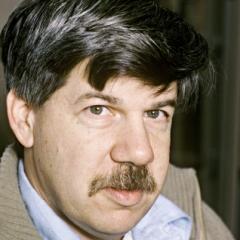
Stephen Jay Gould
Stephen Jay Gould was a renowned paleontologist, evolutionary theorist, science writer, and academic. He is known for his work in ornithology, paleontology, evolutionary theory, and speciation. Gould's writings and papers have had a profound impact on the scientific community, and he was a long-time contributor to the journal 'Nature'. more
You May Also Like
Source: The Panda's Thumb: More Reflections in Natural History
Source: An Urchin in the Storm: Essays about Books and Ideas
Source: The Panda's Thumb: More Reflections in Natural History
“Charles Darwin viewed the fossil record more as an embarrassment than as an aid to his theory.”
Source: Hen's Teeth and Horse's Toes: Further Reflections in Natural History
Source: Punctuated Equilibrium
Source: Hen's Teeth and Horse's Toes: Further Reflections in Natural History