Quotessence
Home / Quotes / Quote by Norbert Elias

Quote by Norbert Elias

“Of course you can more easily recognise the outsiders because they have a different skin color. But let us take for instance the relationship between the White Anglo-Saxon Protestant majority in America and the negroes. What is important here is that the negroes were the descendants from slaves and were excluded from power, while the white majority kept them at bay, kept them down, kept them where they are. If the negroes in the future became assimilated and acquired equal power access, if there were a black president, then many of these things would change.”

Quote by Norbert Elias

Author
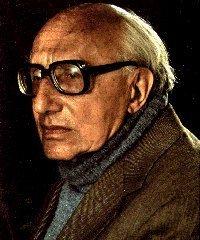
Norbert Elias
Norbert Elias

Norbert Elias (June 22, 1897 - August 1, 1990) was a German sociologist, one of the most important sociologists of the 20th century. He is known for his profound analysis of social change, the process of civilization, and the socialization of individual behavior. more

You May Also Like

“I have touched here on a problem that is masked if one speaks of racism. And that is the fact that the major differences between the established and outsiders group, which create tension and irritation, is not the form of the face or the skin color but the form of behavior: something learned. The form of behavior and feeling, of sentiment, is different in the immigrant groups from that of the established groups, and that may give rise to an enormous irritation.”

“The way one behaves and feels as a Dutchman and Dutchwoman is the result of a long development. It is by no means 'the natural way' or 'the human way' of behaving, it is a particular code of behavior which has developed over the years. And these people, the immigrant people, come from a group where different standards of conduct and behavior have developed. What clashes are these two standards of conduct and behavior.”

“Perhaps I should say that in general there are three solutions to such a situation. I mean not only in Holland, but everywhere where there are minority groups: in America, in Vietnam with the Chinese. Everywhere there is the same problem. But there are fundamentally three, actually only two possible solutions. A possible solution is that the despised minority is able to establish its own state somewhere else. The other solution is a higher or lesser degree of assimilation. And the third possibility, which is not a solution at all, is the permanence of the tension and conflict over time.”

“I think that one not only has to make demands on the established group, but one also has to make demands on the outsider group. One has to make clear: if you want to leave, please do so. But if you want to stay here, a degree of accommodation to the Dutch outlook, Dutch manners, and a degree of identification with the Netherlands will be expected of you. There is no reason why there cannot be Dutch Turks or Dutch Moroccans. But one can expect from them a degree of identification, some change of their own social identity.”

“The number of those who have to be assimilated to the majority is not too high. It remains small compared with the numbers of the majority. But there is one thing - and that is the main reason for this digression - that French and British have in common: to this day they have an immense pride in being French, in being British. The fact that in the meantime both have come down to earth a little has not yet affected their pride in their own nationality and the fact that, if I may express it that way, they are mutual admiration societies: how fine the British are, how fine the French are.”

“Perhaps one could appoint three or four professional people specially concerned with the task of bridge building between the majority and the minority. Bridge building of this kind requires an effort from both sides. It's no good if the majority alone do it. The question is whether there is any response, whether people on the other side of the river also wish to try to build a bridge.”

“When Benjamin Disraeli spoke of the 'two nations' in Britain he was perfectly right, only the working classes were not exactly a nation. But the gap in behavioral standards and in outlook, and of course in standards of living, were enormous. And in course of time, at least in countries such as Britain, the working classes more or less adopted and have become assimilated to the standards of the so-called 'gentle' classes. That is assimilation.The working class has hardly been able to govern, but they are no longer outsiders in relation to the state as they were before.”