“If we range through the whole territory of nature, and endeavour to extract from each department the rich stores of knowledge and pleasure they respectively contain, we shall not find a more refined or purer source of amusement, or a more interesting and unfailing subject for recreation, than that which the observation and examination of the structure, affinities, and habits of plants and vegetables, afford.”
Quote by Joseph Paxton
Work
A Practical Treatise on the Cultivation of the Dahlia
English detailed description more
Author
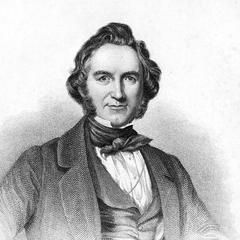
Joseph Paxton
Joseph Paxton was a renowned British architect, best known for designing the famous Crystal Palace in London. Born on August 3, 1803, he passed away on June 8, 1865. Paxton had a significant impact on the field of architecture, particularly in the design of greenhouses and exhibition halls. more
You May Also Like
Source: De Officiis Or on Duties on Obligations
Source: The origin of life
“In natural science the principles of truth ought to be confirmed by observation.”
Source: Novum Organon Renovatum
Source: Hen's Teeth and Horse's Toes: Further Reflections in Natural History
“In the philosophic sense, observation shows and experiment teaches.”
Source: An Introduction to the Study of Experimental Medicine
Source: Under the apple trees
Source: The Essential Peirce, Volume 1: Selected Philosophical Writings? (1867–1893)
Source: Notes on Nursing: What it Is, and what it is Not