Quotessence
Home / Quotes / Quote by Beverly Daniel Tatum

Quote by Beverly Daniel Tatum

Work

Why are All the Black Kids Sitting Together in the Cafeteria?

The book delves into the reasons behind the common observation of Black students grouping together in school cafeterias, examining the social and psychological factors that contribute to this behavior. It provides insights into the complexities of racial identity and the impact of racial segregation in educational environments. more

Author
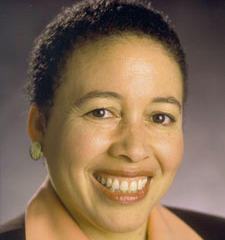
Beverly Daniel Tatum

Beverly Daniel Tatum is an American psychologist and educator, born on September 27, 1954. She is renowned for her research in the fields of race relations and multicultural education, particularly her work on racial identity and racial bias. Professor Tatum teaches psychology at Boston University and has held administrative positions in several academic institutions. more

You May Also Like

“Many white people experience themselves as powerless, even in the face of privilege. But the fact is that we all have a sphere of influence, some domain in which we exercise some level of power and control. The task for each of us, White and of color, is to identify what our own sphere of influence is (however large or small) and to consider how it might be used to interrupt the cycle of racism.”

“Pedagogy of the Oppressed resonated with progressive educators, already committed to a 'child-centered' rather than a 'teacher-directed' approach to classroom instruction. Freire's rejection of teaching content knowledge seemed to buttress what was already the ed schools' most popular theory of learning, which argued that students should work collaboratively in constructing their own knowledge and that the teacher should be a 'guide on the side,' not a 'sage on the stage.'”

“Look, this is a man, he's got great numbers. He talks about numbers. I'm beginning to think not only did he invent the Internet, but he invented the calculator. It's fuzzy math. It's a scaring - trying to scare people in the voting booth. Under my tax plan, that he continues to criticize, I set a third - the federal government should take no more than a third of anybody's check.”

“In its pursuit of justice for a segment of society, in disregard of the consequences for society as a whole, what is called 'social justice' might more accurately be called anti-social justice, since what consistently gets ignored or dismissed are precisely the costs to society. Such a conception of justice seeks to correct, not only biased or discriminatory acts by individuals or by social institutions, but unmerited disadvantages in general, from whatever source they may arise.”

“Yes, over the centuries economic progress has reduced some gross disparities - modern Americans are relatively unlikely to simply starve to death (though it can happen), so in that sense the gap between rich and poor has narrowed. But the question isn't whether society is, in some sense, more equal than it was in 1900. It's whether it is radically more unequal than it was in 1970. And of course it is.”

“Europe is often held up as a cautionary tale, a demonstration that if you try to make the economy less brutal, to take better care of your fellow citizens when they're down on their luck, you end up killing economic progress. But what European experience actually demonstrates is the opposite: social justice and progress can go hand in hand.”