Quotessence
Home / Quotes / Quote by Joshua Ferris

Quote by Joshua Ferris

“The internet takes a lot of the anxiety of life away. It's a kind of deity. You're never lonely. You're always distracted. If you spend enough time on it, there's not really that nagging sensation of existential despair; it erases it very effectively. And it's monolithic. And thanks to it, we've got the ways to linger there after death - your blog exists afterwards, your e-mail exists afterwards.”

Quote by Joshua Ferris

Author
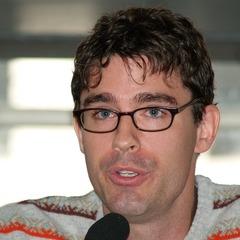
Joshua Ferris
Joshua Ferris

Joshua Ferris is an American author born on November 8, 1974. His works are celebrated for their unique narrative style and profound insights into modern life. more

You May Also Like

“I think comedy is so much easier to do on the page than it is in real life. When I'm writing, comedy is an easy way to win over the reader. You're automatically more disposed to keep reading, thinking maybe, "I'll get another laugh or two." I think it's a survival instinct in me. I mean, you don't want to lose these guys within five or ten pages. You want them to keep going. I think to some extent it's a desperate measure that I throw out there, because a novel isn't a complete waste of time if it made you laugh.”

“Comedy is like fictional charm. It's the charm of fiction. Or the charisma of fiction. When you meet somebody who's immediately charismatic, you're attracted to that person. And in fiction it's got to come out in either one of two ways: in the prose itself, and you're hooked immediately because you never want to leave such a colorful and penetrating world. Or, it's simply being a funny writer.”

“The crisis was 2008, in 2015 - almost eight years later and the gap between where we would have been and where we are is huge and not closing. The implied unemployment rate is very high, labour force participation is very low, and the increase in wages in the second quarter was the lowest in 25 years. Before this turmoil, the U.S. economy was in better shape than Europe or Canada, but not strong.”

“The median family income in the U.S. is lower than it was a quarter-century ago, and if people don't have income, they can't consume, and you can't have a strong economy. There's significant risk - actually it's no longer a risk - a significant likelihood of a marked slowdown not only in China, but also in a lot of other countries like Brazil, which is in recession. All of the other countries that depend on commodities, including Canada, are facing difficulties. So it's hard to see a story of a strong U.S. economy.”

“People at the top spend less money than those at the bottom so when you have redistribution toward the top, aggregate demand goes down. Unless you intervene, you're going to have a weak economy unless something else happens. That something else could be a bubble. The United States tried a tech bubble and a housing bubble, but those were not sustainable answers. So I view inequality as a fundamental part of our macroeconomic weakness.”

“There have always been two theories about inequality. One is that it reflects just deserts. The other is that there are large elements of exploitation and inequality of opportunities. The evidence is overwhelmingly that the increase in inequality is associated with those negative factors. If it were all social contribution, then when the top did better, they would be contributing to everybody's well-being. That trickle-down hasn't happened. We've seen median income, people in the middle, actually worse off than they were 25 years ago.”