“Logic is not only an exact science, but is the most simple and elementary of all sciences; it ought therefore undoubtedly to find some place in every course of education.”
Quote by William Stanley Jevons
Work
Elementary Lessons in Logic: Deductive and Inductive : with Copious Questions and Examples and a Vocabulary of Logical Terms
This book serves as an introductory guide to the principles of logic, providing a comprehensive exploration of deductive and inductive reasoning methods. It includes a variety of questions and examples to aid in understanding and application, along with a comprehensive list of logical terms for reference. more
Author
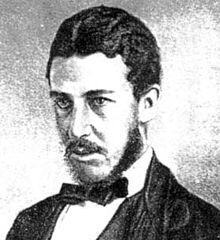
William Stanley Jevons
William Stanley Jevons was a British economist born on September 1, 1835, and died on August 13, 1882. He was a pioneer in the theory of marginal utility and had a profound impact on the development of economics. more
You May Also Like
Source: Elementary Lessons in Logic: Deductive and Inductive : with Copious Questions and Examples and a Vocabulary of Logical Terms
Source: Elementary lessons in logic
Source: The Theory of Political Economy
Source: Political Economy
“Property is only another name for monopoly.”
Source: The Theory of Political Economy
Source: The Theory of Political Economy
“The calculus of utility aims at supplying the ordinary wants of man at the least cost of labour.”
Source: The Theory of Political Economy
Source: The Theory of Political Economy
Source: The Theory of Political Economy
Source: The Theory of Political Economy